An image containing 3 icons - a bee, a thermometer and coral.

INFOGRAPHIC: The difference between 1.5 and 2 degrees warming

This content is 6 years old.

A few degrees of warming is incredibly significant.

The Intergovernmental Panel on Climate Change (IPCC) strongly recommends limiting the global temperature increase to 1.5°C, to avoid the impacts of climate change steeply escalating. Even at 1.5°C of global warming, times will be tough. But the impacts amplify rapidly between just 1.5°C and 2°C of temperature increase, as visible in the following infographic.
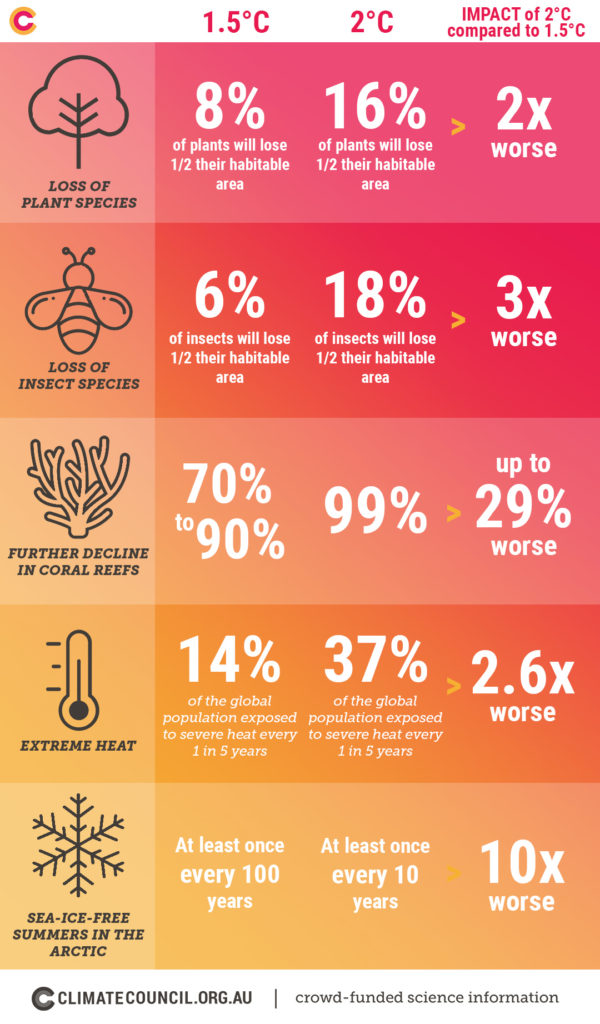
An infographic containing information about the impacts of 1.5 degree and 2 degree warming, and the difference between both.
Adapted from WRI (07/10/18) based on data from IPCC (10/2018).

To avoid the impacts we’d experience at 2 degrees warming, we have no other choice but to limit our warming to 1.5 ̊C. It is still possible, but only if we act now.

If nothing changes, we are on track for a rise in temperatures of between 4-6 ̊C. To put this in context, the difference in temperatures between now and the last ice age was around 4 ̊C.


Read more:

The good, the bad and the ugly: Limiting temperature rise to 1.5 degrees

What is climate change and what can we do about it?


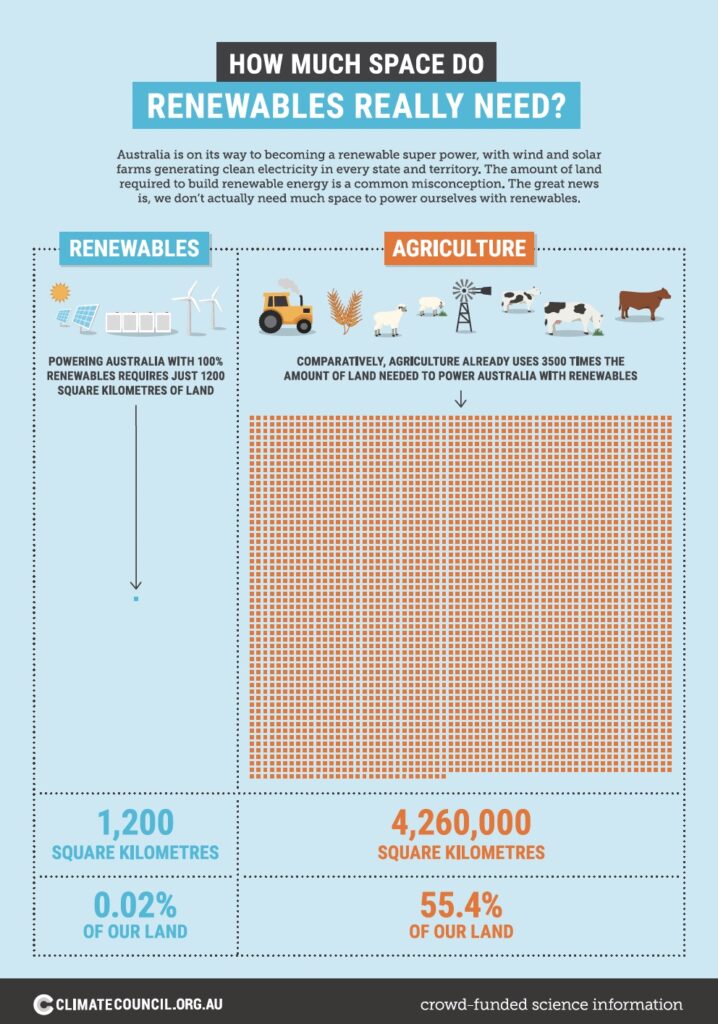
How much space do renewables really need?

Australia is on its way to becoming a renewable super power, with wind and solar farms generating clean electricity in every state and territory. The amount of land required to build renewable energy is a common misconception. The great news is, we don’t actually need that much space to power ourselves with renewables.

Learn more

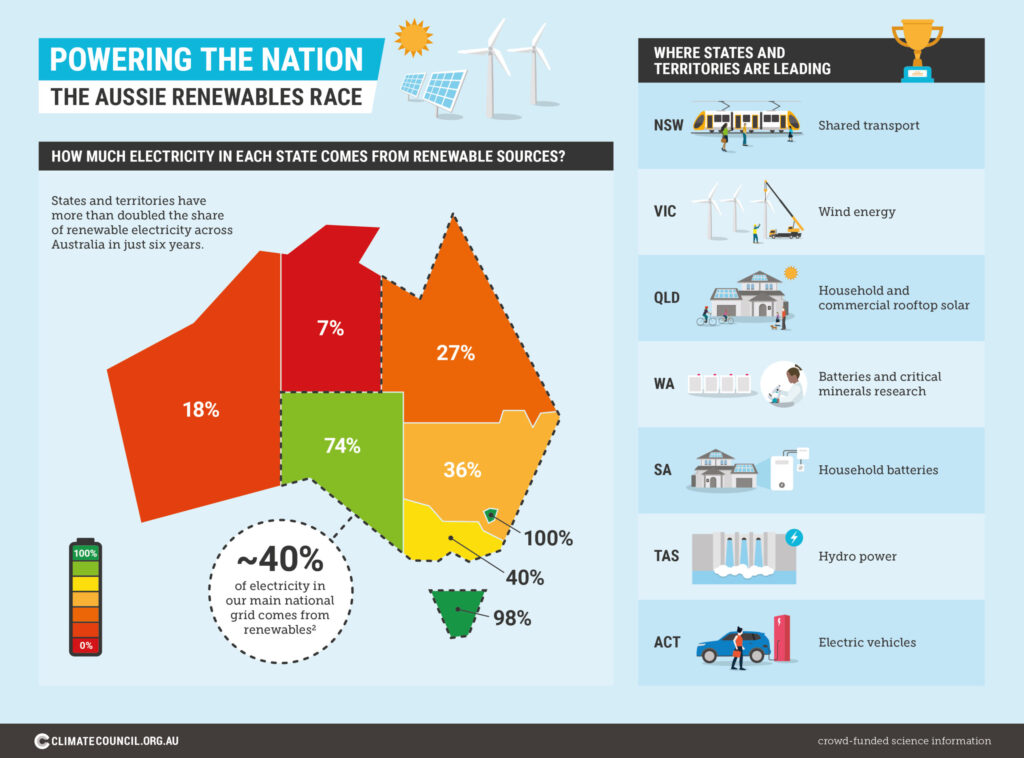
2024 progress scorecard: How states and territories measure up

Nowhere is our rapid shift towards an economy powered by renewable energy more visible than at the state and territory level, where governments, communities and households are leading the charge. This transformation is dynamic, with different states and territories leading the way on different aspects.

Learn more