The need for a switch to renewable energy is more urgent than ever. Climate change, driven by the extraction and burning of coal, oil and gas, is already wreaking havoc on communities, economies and ecosystems right around the world. The easiest, quickest and most effective way of driving down climate pollution and giving ourselves the best chance of kicking climate change’s butt is by moving to an energy system based on renewables and storage.
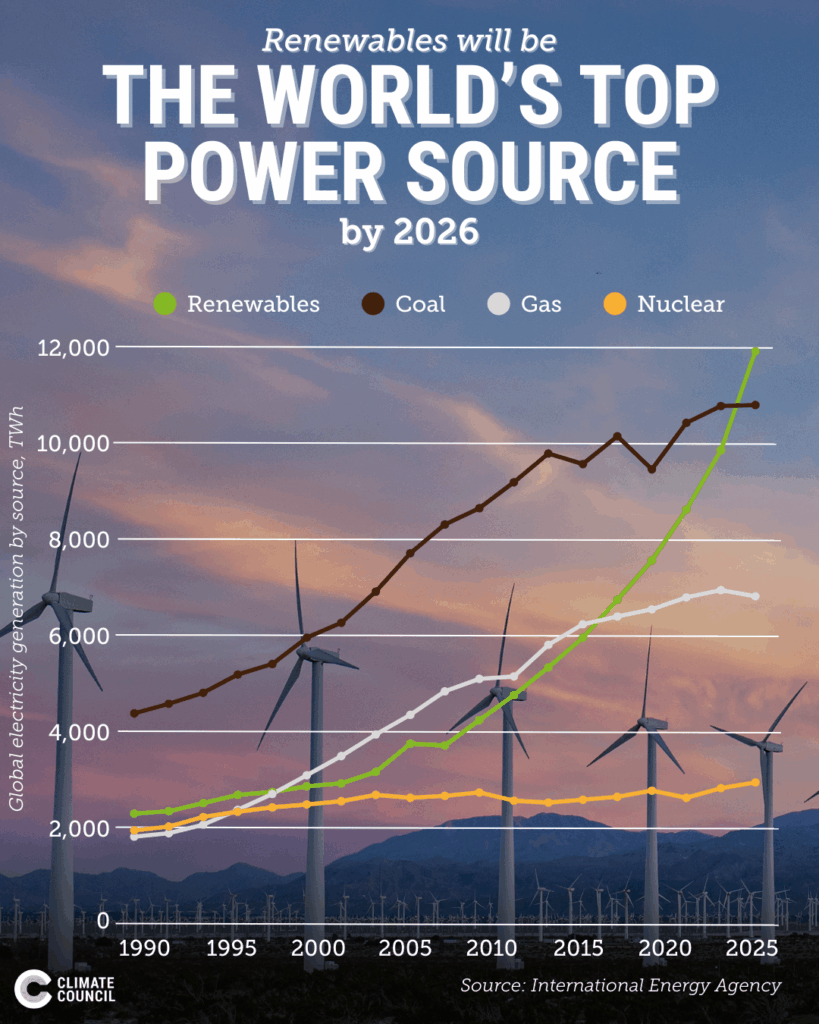
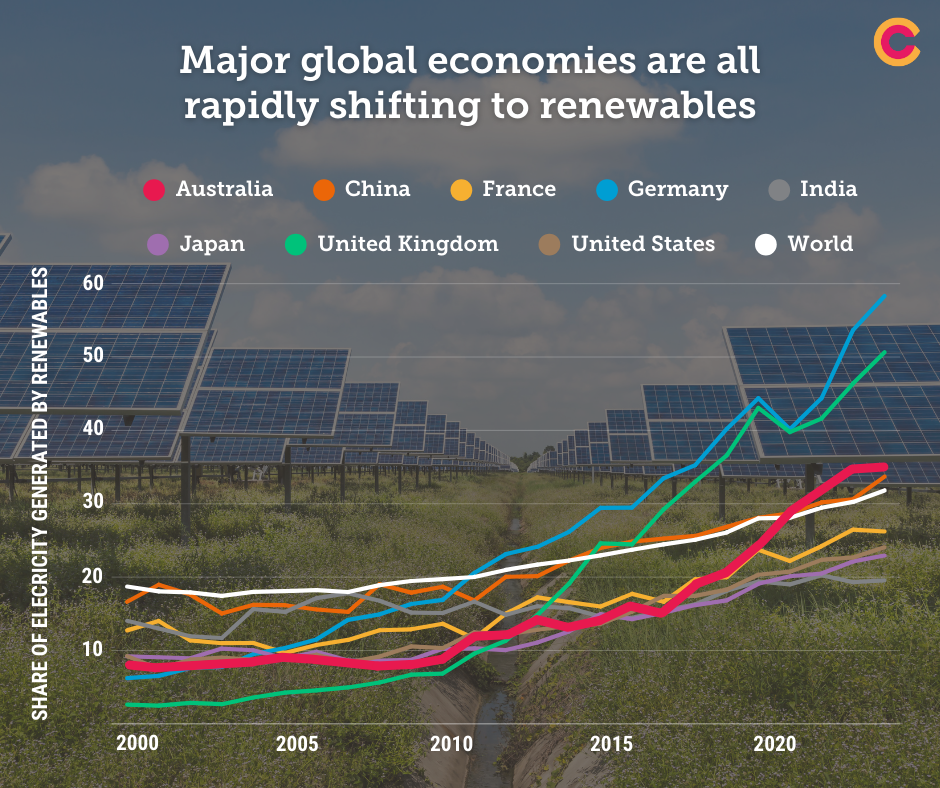
Here in Australia, we are building out renewable power and storage at record rates, and they now make up more than 40% of our electricity in our main grid – and 36% across the country. We are far from alone in the global renewable rollout: in the first half of 2025, for the first time ever, the world made more power with renewables than from coal. In total, around 90 countries now make more than 35% of their power with renewables.
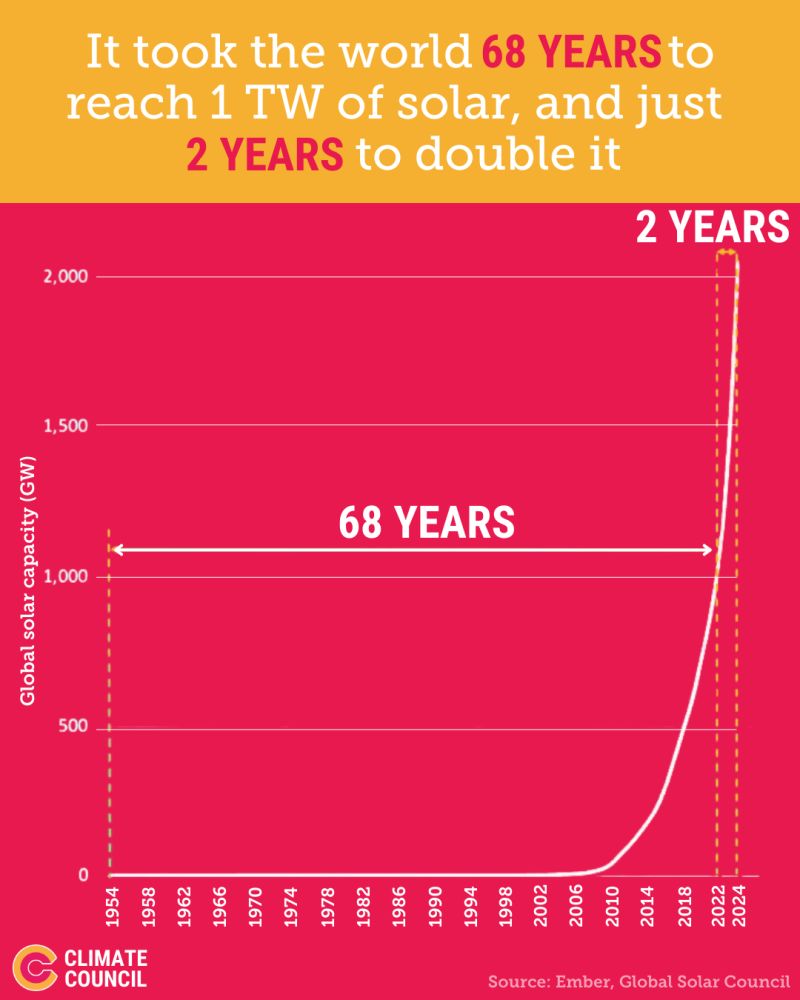
Around the world, the “sun is rising on a clean energy age” with more than 9 out of 10 renewable power projects being cheaper than fossil fuel alternatives. Renewables will grow faster than any major energy source in the next decade, making the transition away from fossil fuels inevitable.
Learn more about the global progress on climate action.
Which countries have the most wind and solar power?
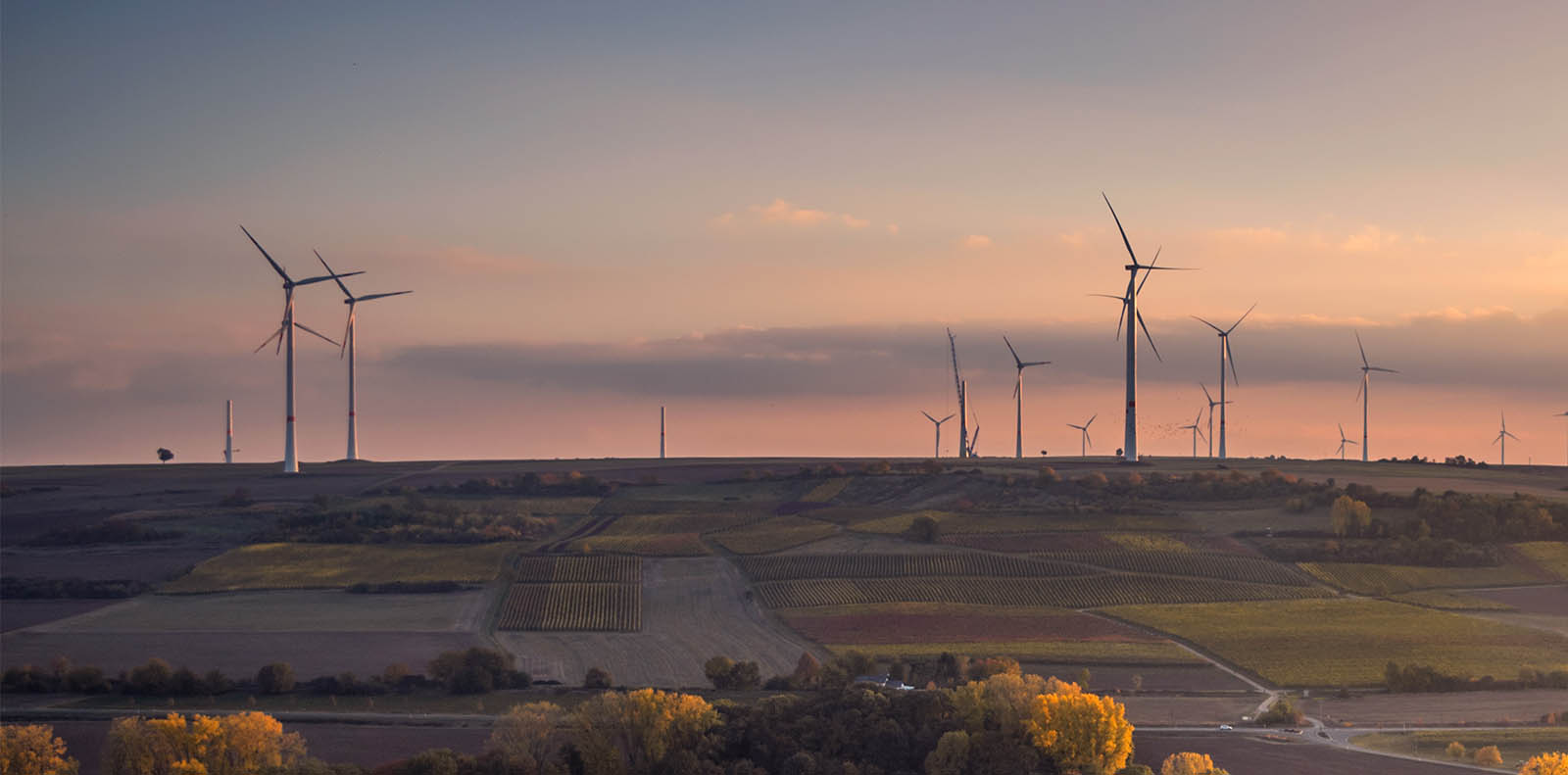
Australia, like many countries around the world, is relying mostly on a combination of wind, solar and storage (like batteries and pumped hydro) for its renewable power. Here’s the lowdown on the top 11 wind and solar-powered countries.
The world’s top wind- and solar-powered countries

*Australia refers to Australia’s main grid, the National Electricity Market (NEM). The NEM includes all states and territories except the Northern Territory and Western Australia.
1. Denmark
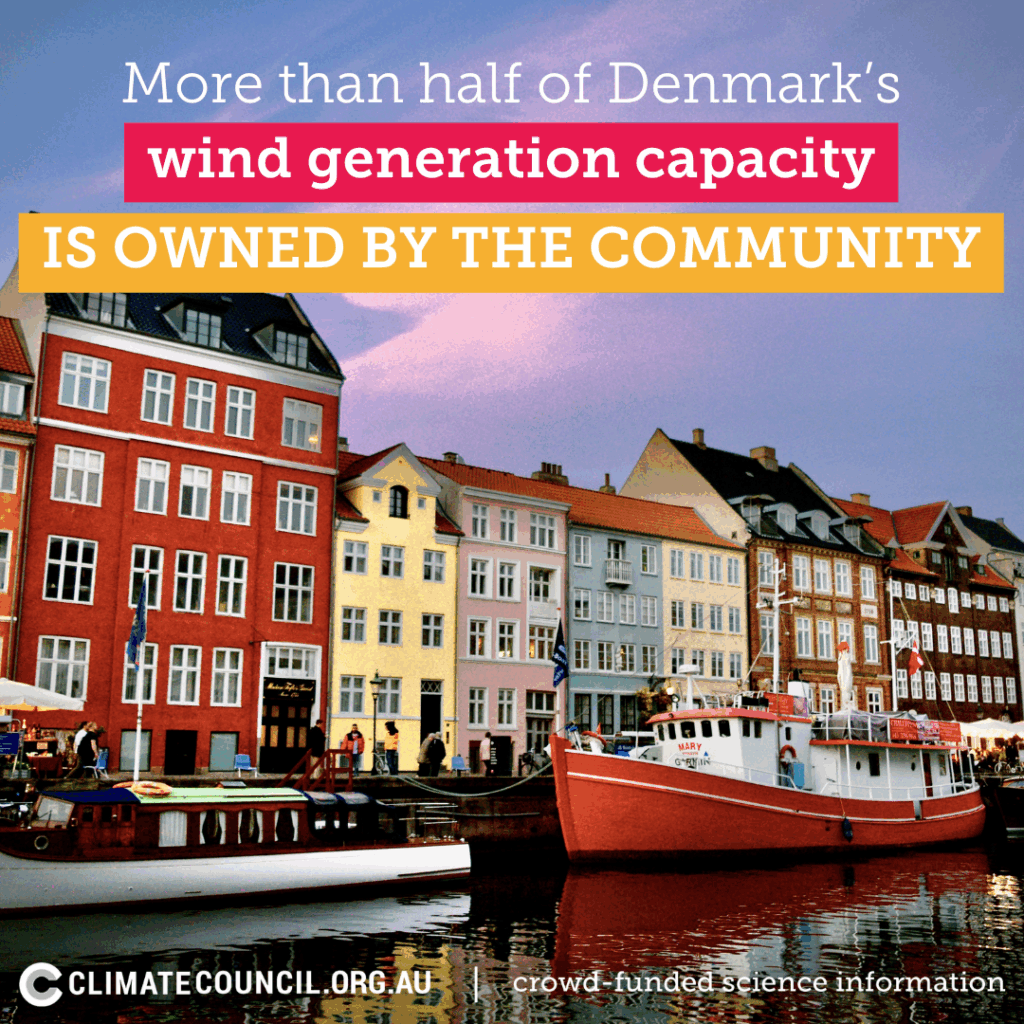
Denmark is one of the world’s renewable leaders, sourcing 88% of its power from renewable sources in 2024, and racing towards 100% by 2030. Wind alone provides 58% of the country’s power, thanks to more than 50 years of community leadership in wind projects. For nearly 15 years the Danish government has required all new wind projects to be at least 20% community owned. Now, more than half of Denmark’s wind generation capacity is owned by the community, helping to ensure its citizens benefit from the shift to renewables and building social licence for a rapid rollout.
2. Djibouti
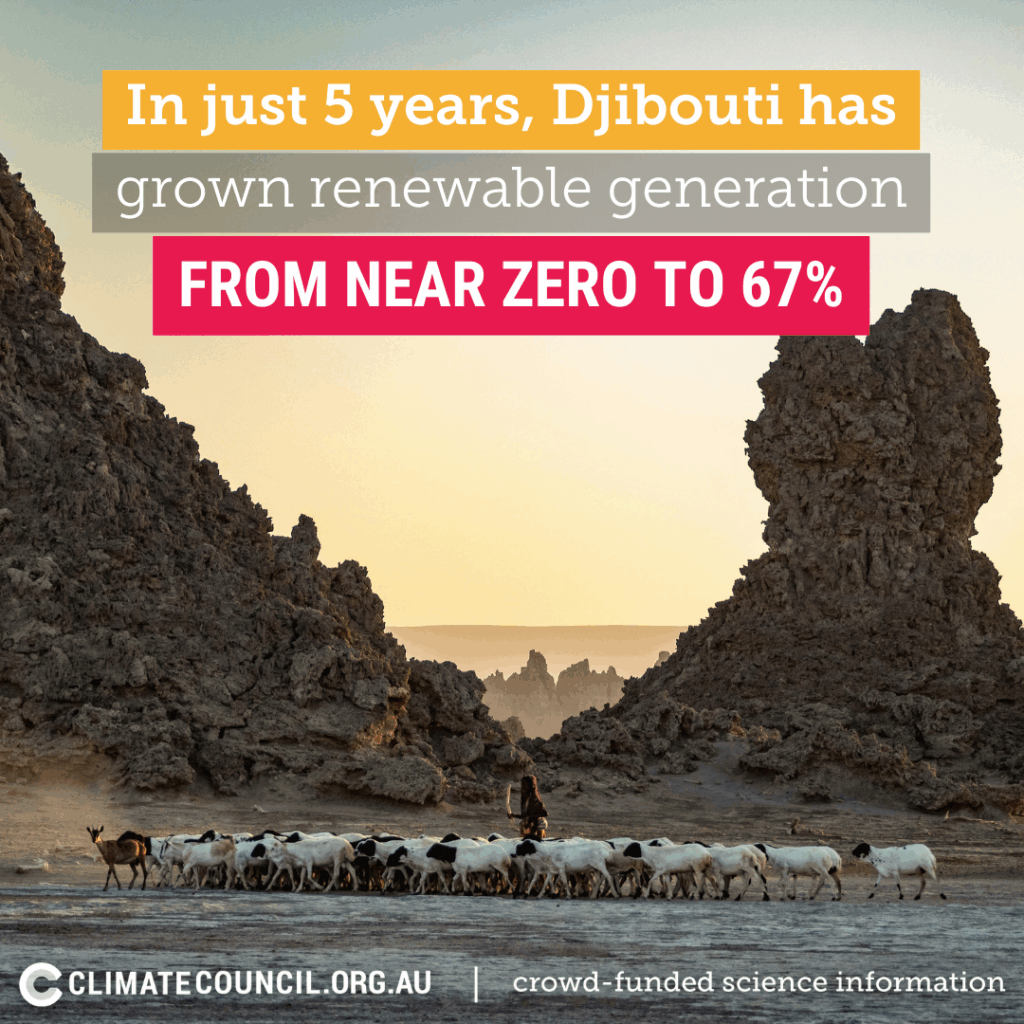
In just five years, the Djibouti in northeast Africa has grown its renewable generation from nearly zero to 67% – its first wind farm opened in just 2023. Djibouti has a target to be the first country in Africa to reach 100% renewable by 2035. It is rolling out renewables as a national priority, to reduce power prices, support its industries to grow and increase its energy independence.
3. Lithuania
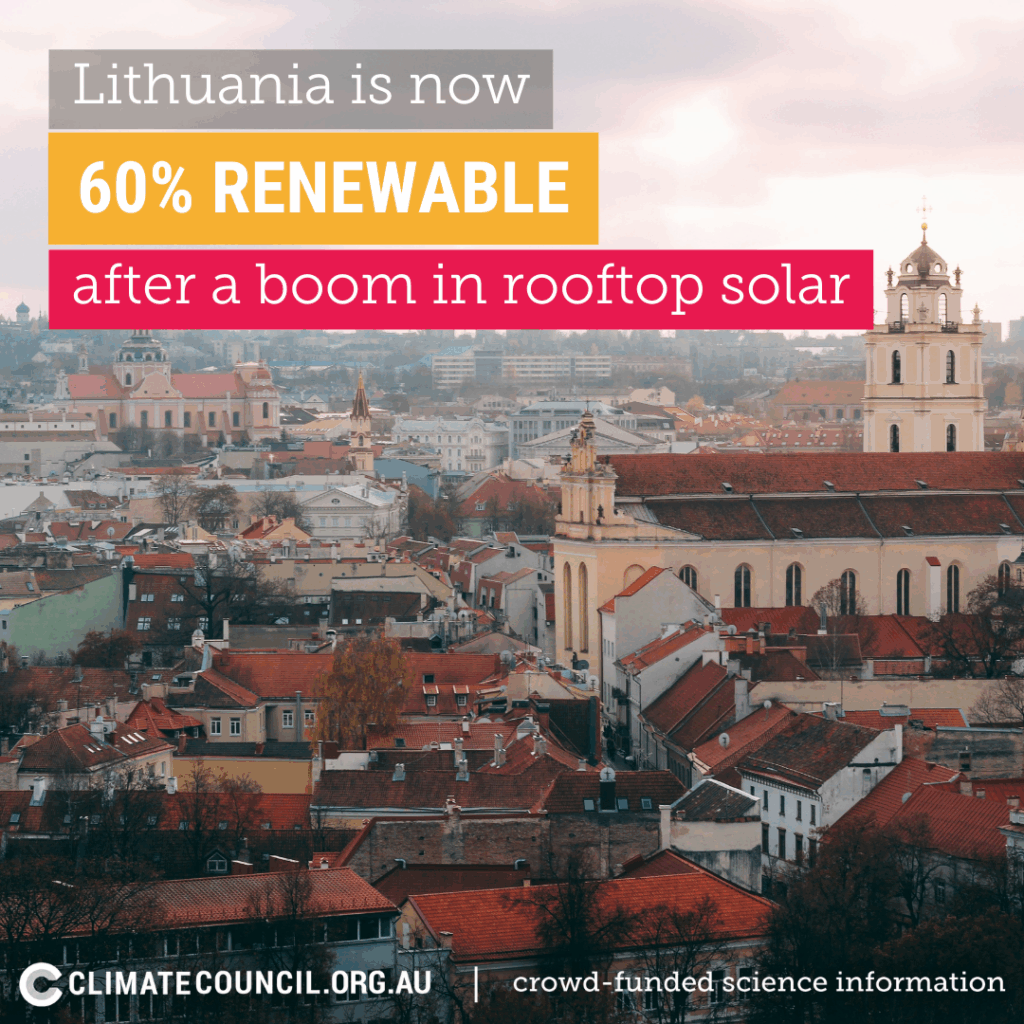
In recent years as the Russia-Ukraine war has impacted energy supply and prices worldwide, Lithuania has emerged as a renewable leader, ending its reliance on imported Russian fossil fuels in 2022. It has more than doubled its renewable generation since 2018 and is now more than 60% renewable, supported by a boom in rooftop solar. By 2030, Lithuania aims to shift from a net electricity importer to an exporter.
4. Luxembourg
Luxembourg, historically very reliant on fossil fuels, has been rapidly rolling out renewables as part of its plan to cut emissions by 55% by 2030. The country has already reached more than 60% wind and solar power, compared to just 9% a decade ago.

5. Portugal
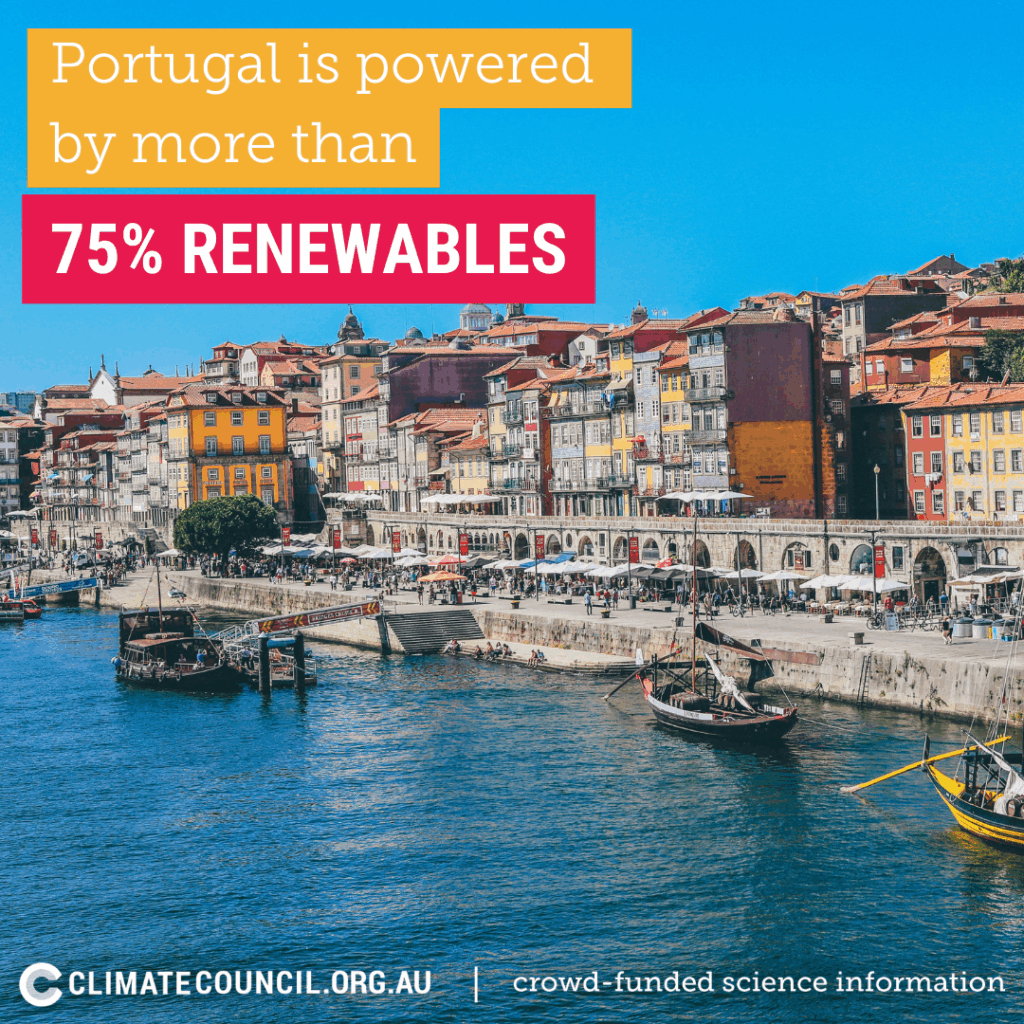
Portugal is powered by more than 75% renewables, with 45% coming from wind and solar, and the majority of the remainder from hydro. Portugal’s solar generation is growing rapidly – it increased by 440% between 2017 and 2024! Portugal has been coal-free since 2021, and is working to phase down its gas use to reach 93% renewable by 2030. Portugal has a target to completely end gas generation by 2040.
6. The Netherlands
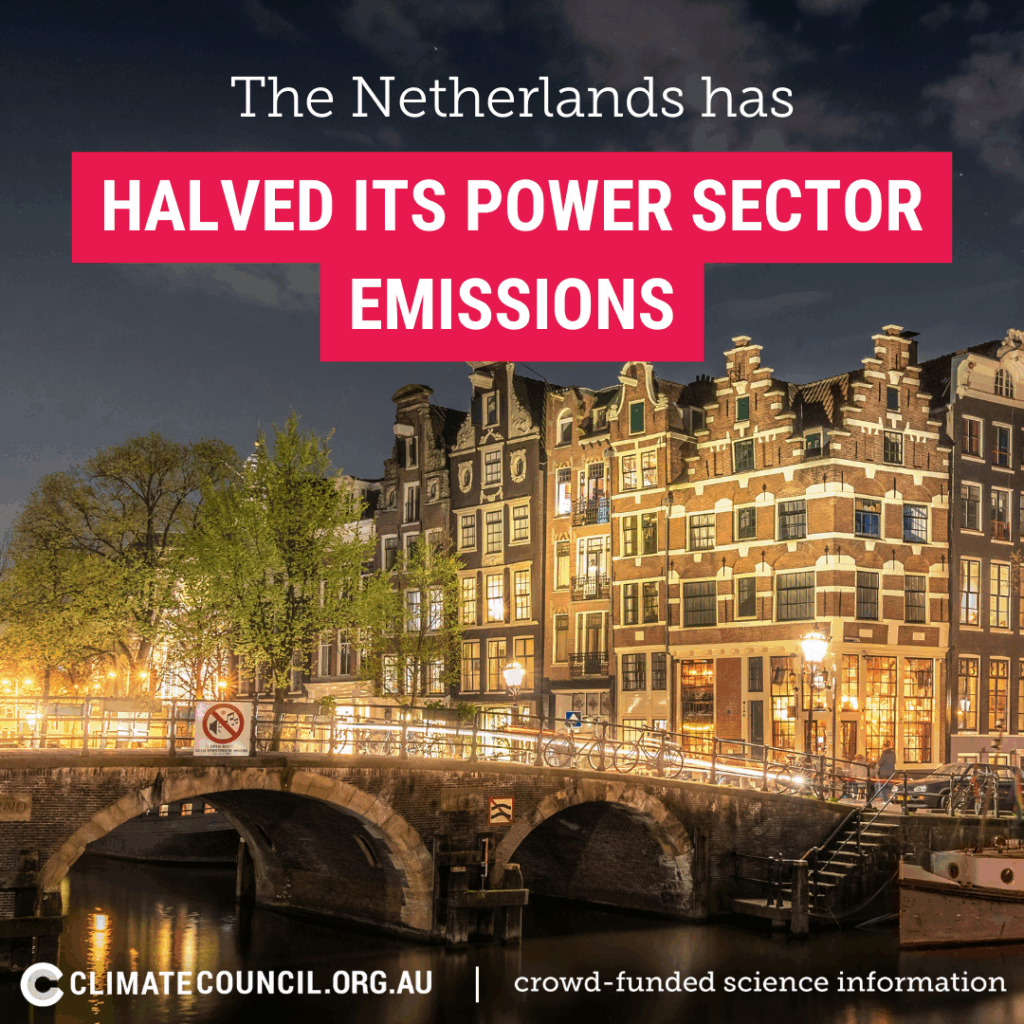
The Netherlands has halved its power sector emissions since 2018 thanks to rapid growth in both solar and wind power which now make up 45% of its power. The Netherlands’ position on the North Sea makes it ideal for offshore wind generation: it has a target to more than quadruple its offshore wind capacity from 5 GW today to 21 GW by 2032 – around 75%of its current electricity needs. Increasing its offshore wind and other renewable generation will enable the Netherlands to completely phase out coal by 2029.
Want to know more about offshore wind? Read our explainer Australia and offshore wind.
7. Germany
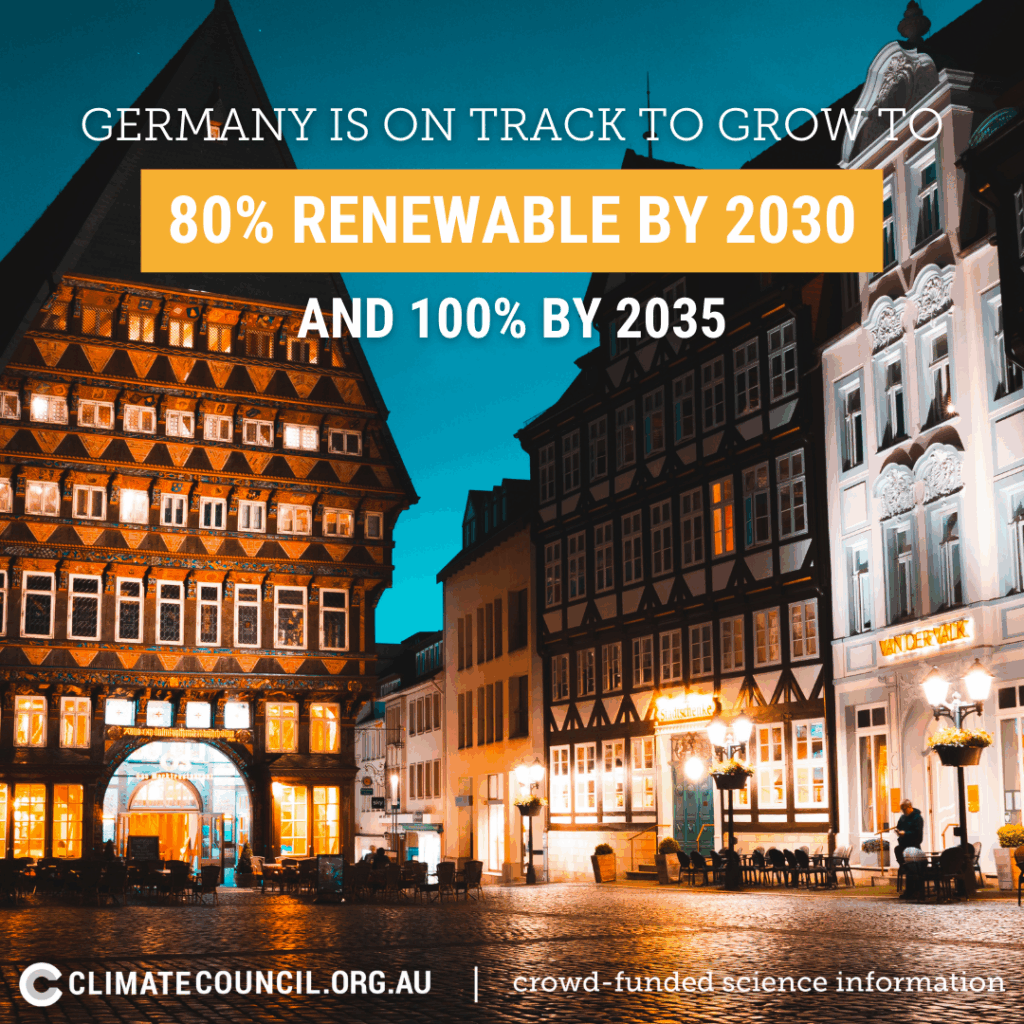
Germany currently makes around 45% of its power from renewable resources, and has targets to grow to 80% renewable by 2030, and 100% by 2035. Germany is a leader in offshore wind, and is also installing solar at record rates: on average, Germany has been installing more than 100,000 solar panels every day!
8. Spain
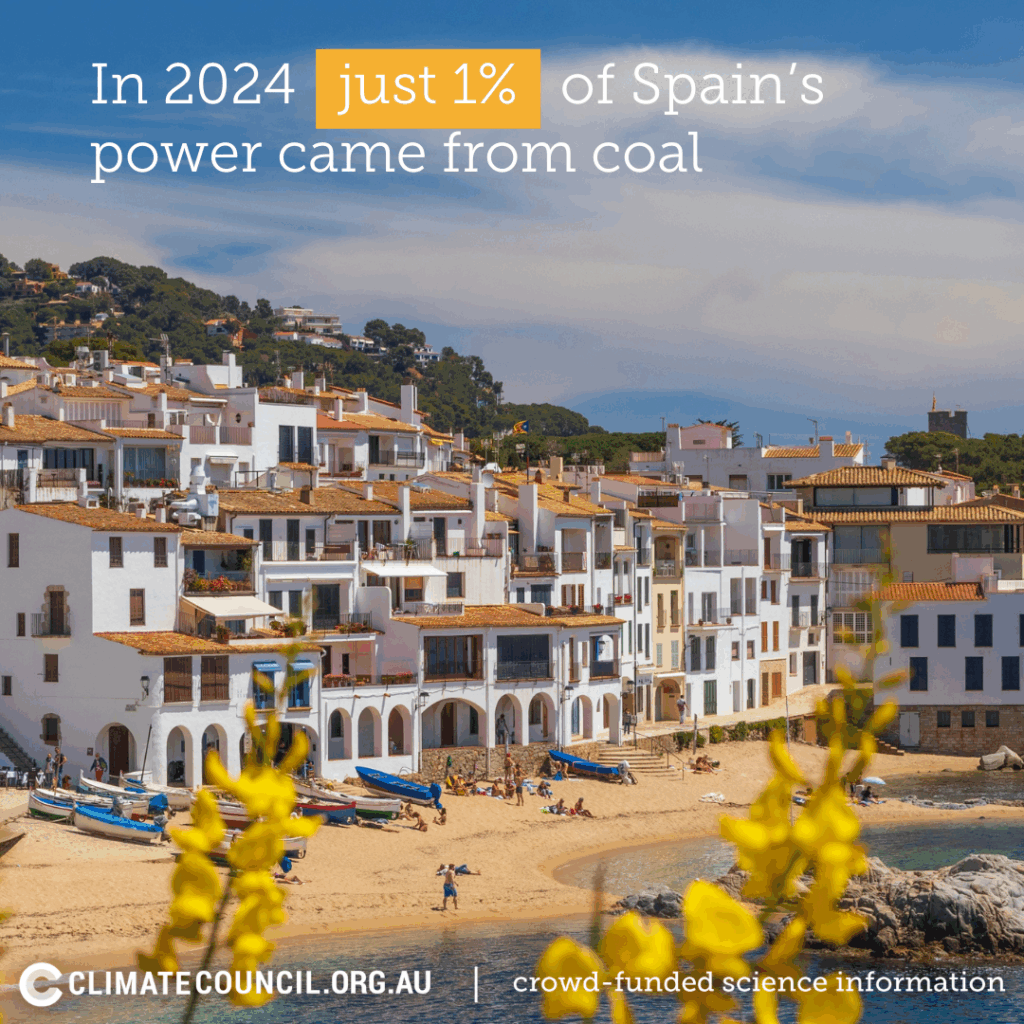
Spain currently makes around 43% of its electricity from wind and solar, and another 11% from hydro. In 2024, just 1% of Spain’s power came from coal, and its last mainland coal-fired generator is set to close in 2026. Spain plans to reach 81% renewable by 2030.
9. Ireland
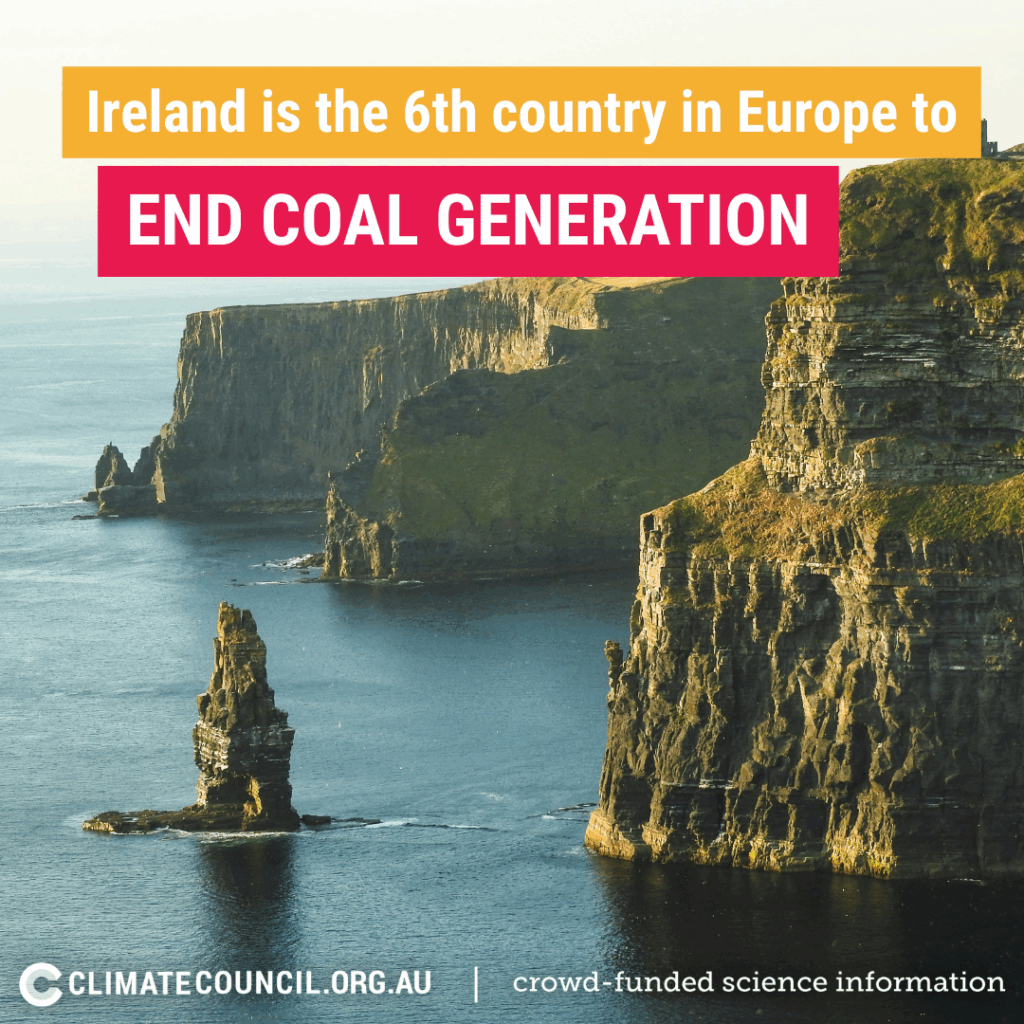
Ireland became the sixth country in Europe to end coal generation in June 2025 thanks to impressive growth in its wind generation capacity in the past 25 years – from just 117 MW in 2000, to more than 5 GW now installed across the country. In total, around 40% of the country’s electricity comes from wind and solar.
10. Greece
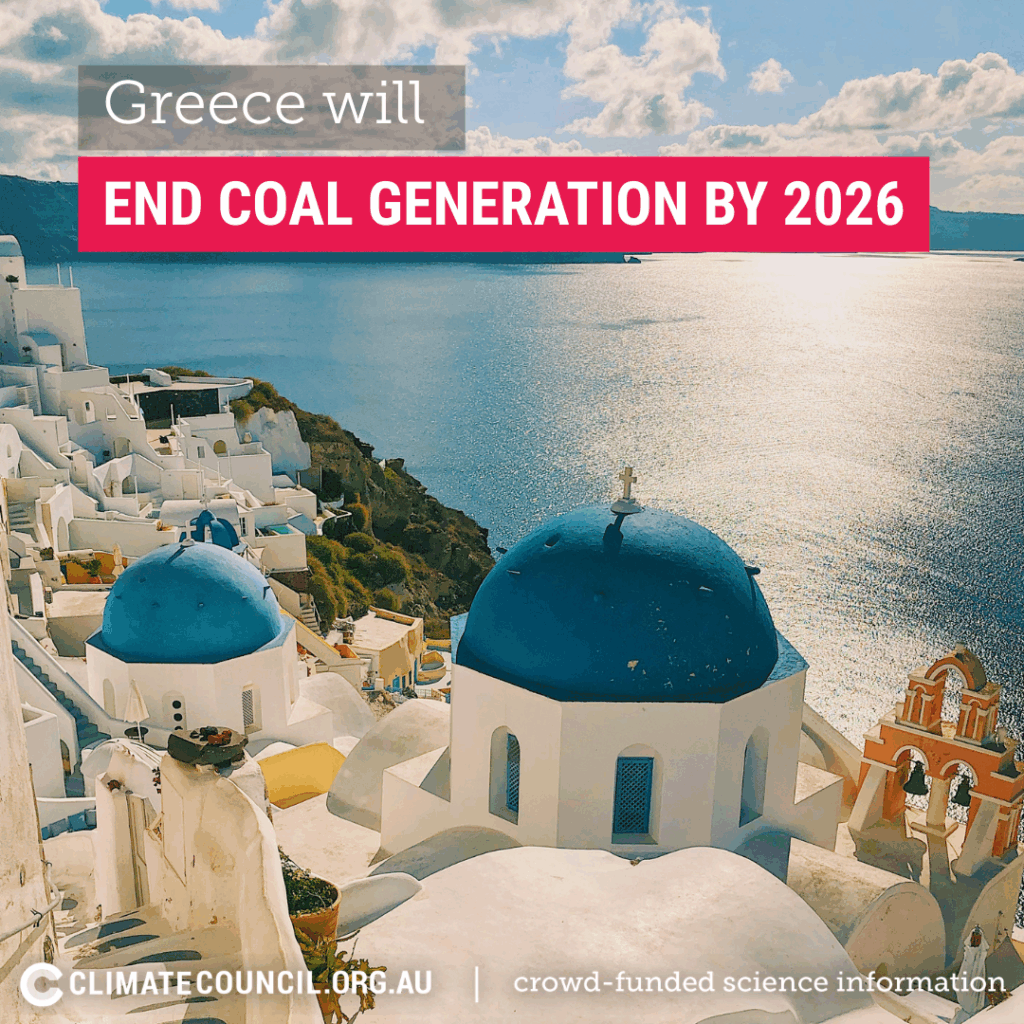
With help from its abundant Mediterranean sunshine, Greece has more than doubled its renewable generation in the past decade. Renewables now make up 50% of its total generation, with nearly 40% from wind and solar. Like Australia, Greece has a target to reach 82% renewable by 2030. As part of this, Greece will end coal generation by 2026.
11. Mauritania
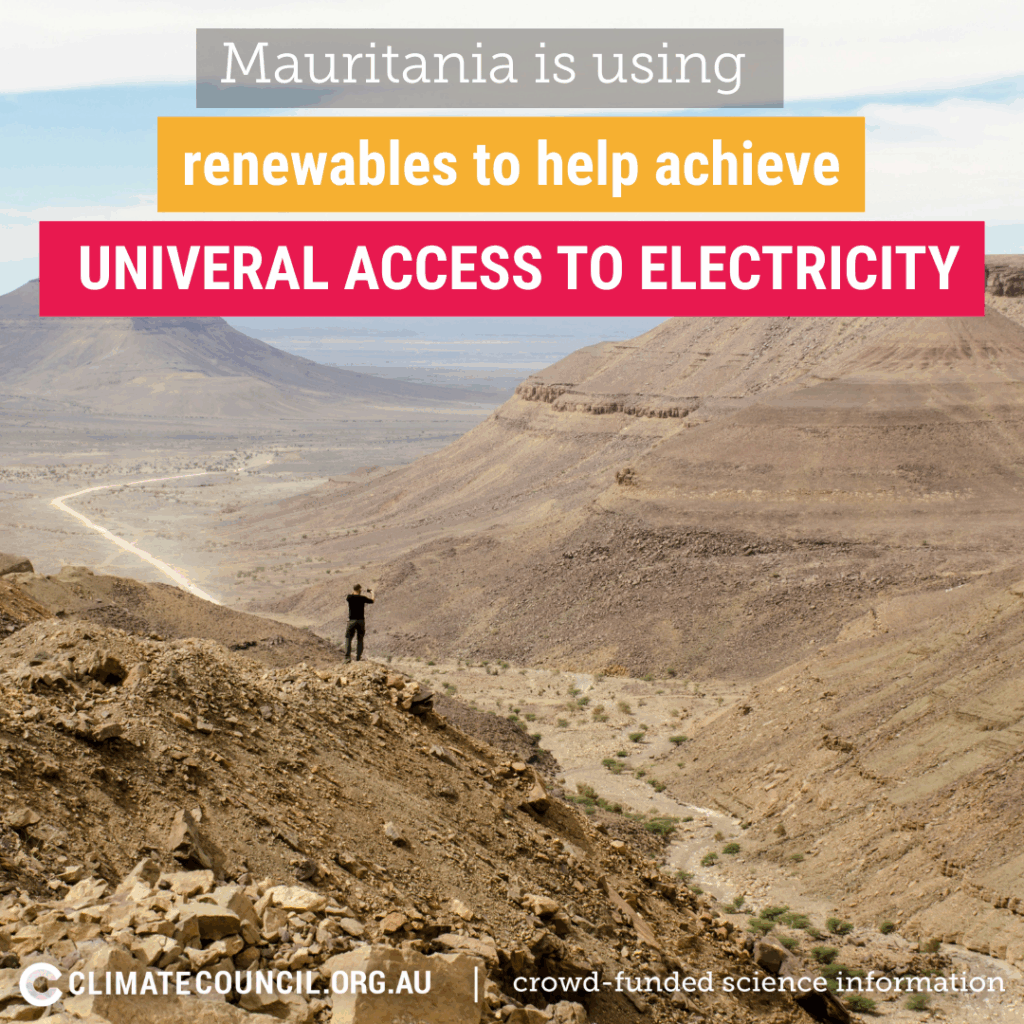
Mauritania is rapidly transforming its energy systems and economy: before 2008, the share of electricity produced from renewables was less than 1%. Now, it’s more than 50% renewable, with most of this coming from wind and solar, and is aiming to reach 70% by 2030. With fewer than 10% of rural Mauritanian households connected to electricity, renewables are a key part of the country’s goal of achieving universal access by the end of the decade.
How does Australia’s shift to renewables compare with the rest of the world?
Australia currently ranks 12th place for the share of wind and solar in our main grid, despite being the sunniest and one of the windiest countries in the world.
Since our first wind and solar projects started up in the 1980s, they have grown to make up 36% of our main grid, and a further 6% of our power comes from hydro. Rooftop solar is where we really shine: one in three households have panels on their roof, more than anywhere else in the world. Rooftop solar alone makes up 13% of our power! We are also in the midst of a battery boom, with more than one million household batteries expected to be installed between now and 2030 to soak up all the excess solar power from our rooftops. These community-owned energy systems are cutting climate pollution and slashing power bills at the same time – homes with solar and battery can save more than $2,000 every year on average.
We can learn from the successes around the world to make the most of our abundant renewable resources and ramp up our ambition even further to roll out more reliable, affordable clean power.
Learn more about how renewables are the cheapest form of energy for Australia.
How are renewables impacting power bills around the world?
The International Energy Agency has found that reaching net zero by 2050 will lead to a clear decline in total household energy bills (including power, gas and fuel) in advanced economies like Australia.
While power prices are complex and depend on many factors – not just the source of power – countries around the world are showing that renewables put downward pressure on power bills. For example:
- In Ireland, research has found that wind and solar farms have saved Irish homes and businesses €840 million since 2000 (nearly AUD $1.5 billion). Ireland has a target to reach 80% renewable by 2030, which could cut consumer bills by an additional €610 million (more than AUD $1 billion).
- In Spain between 2021 and 2024, as renewable generation increased by 20%, wholesale power prices dropped by nearly 20%.
- In the United Kingdom, wind power saved homes and businesses £104.3 billion (more than AU$2 billion) between 2010 and 2023, due to its direct impact on electricity prices as well as reduced gas prices due to lower gas demand.
Have any countries reached 100% renewable?
Several countries including Costa Rica, Nepal, Albania, Ethiopia, Iceland and Norway have already reached, or come very close to, 100% renewable power.
These countries have unique resources compared to other parts of the world, and are able to make significant amounts of power using traditional technologies like hydro and geothermal generation. However, other countries relying more on wind and solar are quickly catching up, like Denmark and Estonia which aim to be 100% renewable by 2030.
For example, Iceland – the “land of fire and ice” – has built a 100% renewable power system using hydro and geothermal resources. Iceland is making the most of the glaciers which cover 11% of the country, and its location on the volcanic Mid-Atlantic Ridge. Iceland started its renewable journey back in the 1970s as a way of reducing its reliance on expensive imported fossil fuels, and hasn’t looked back! Thanks to its abundant renewable power, Iceland citizens pay “almost nothing” for their electricity.