The Australian Energy Market Operator (AEMO) has released the 2026 Draft Integrated System Plan (ISP). Think of it as a roadmap for Australia’s electricity grid. AEMO’s job is to talk to thousands of experts and test many scenarios to develop a plan that cleans up our grid and keeps it reliable as Australia’s polluting, ageing and unreliable coal-powered generators close down.
The draft 2026 roadmap confirms what plenty of energy experts know (and 4 million Aussie households with solar on the roof have experienced): renewable energy, powered by the sun and wind, is the lowest-cost way to deliver the clean and reliable energy Australia needs now.
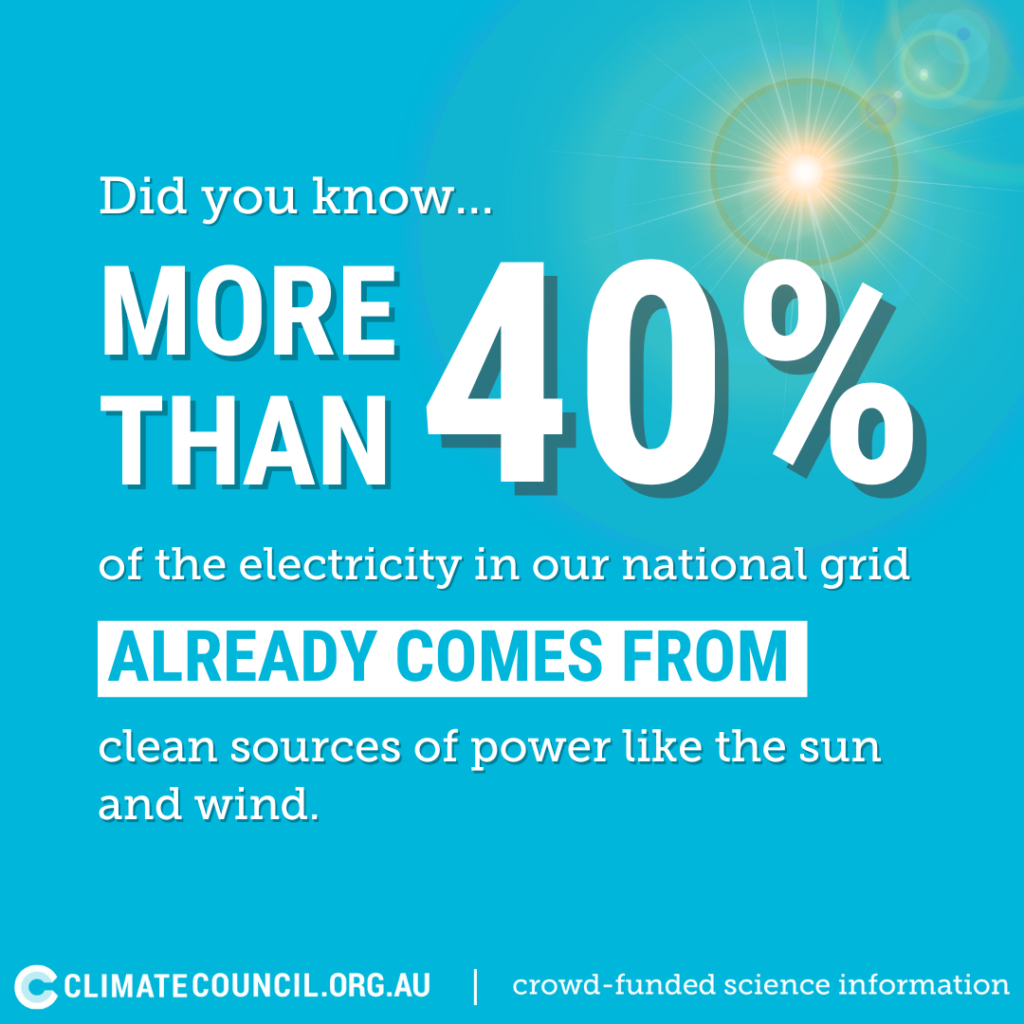
The latest ISP shows we are well on our way to a reliable renewables-powered grid, with more than 40 percent of the electricity in our main national grid already coming from clean wind, hydro and solar. Now, we need to build on this progress so even more Australians can enjoy the benefits.
Let’s take a look in a bit more detail.
First, what’s AEMO?
AEMO is the organisation that makes sure our electricity and energy systems work smoothly to provide clean, reliable and affordable power for our homes, businesses and industry. Every two years, AEMO publishes an updated roadmap that governments, businesses, investors and others rely on for upgrading Australia’s electricity grid all the way out to 2050. This shows us the best way forward to keep power reliable as we keep cutting climate pollution from coal and gas and our energy needs keep growing.
AEMO’s roadmap specifically looks at Australia’s main national electricity grid (referred to as the National Electricity Market, or NEM), which is one of the largest power systems in the world. It provides electricity to more than 23 million people – that’s almost 90% of Australia’s population.
What does the roadmap tell us? Here are our top six takeaways.
1. The switch to renewable energy is well underway, and picking up pace
Altogether, clean energy sources like hydro, rooftop solar, and solar and wind farms are already supplying 40 percent of the electricity in the national grid annually. In the right conditions, they provide even more – at one point on 11 October this year, 79% of our electricity came from renewables!
Aussie households are generating a lot of this clean power, with millions of families simultaneously cutting their power bills and climate pollution by putting solar on the roof. In early 2025, rooftop solar was contributing nearly 15% of the electricity in our national grid – more than large-scale solar, wind or gas. In South Australia, rooftop solar has met more than 100% of demand at certain times over the past year.
Households, businesses and investors alike are embracing renewable energy because it’s affordable, clean and can be rolled out fast. AEMO says accelerating the build out of clean wind and solar – backed by storage – is the lowest cost energy plan for Australia.
Australia is not alone in the shift to renewables: Investors around the world favour renewable energy and supporting technologies over fossil fuels. Globally in 2024, renewable generation received three times as much investment as coal did. In the first half of 2025 and for the first time, more of the world’s energy was delivered by renewables than by coal.
2. Coal is making a quick exit, so we need to build new capacity ASAP
Australia’s coal-fired electricity generators are retiring. Those that are left are ageing, unreliable and expensive to maintain and run around-the-clock. They are frequently taken offline to deal with breakdowns and maintenance outages, which puts pressure on the rest of our power grid.
AEMO is preparing for two-thirds of Australia’s coal-fired generators to close by 2035 so we’re in a race against the clock to get replacement power online before this happens. The roadmap confirms that a combination of rooftop solar and community batteries, together with large-scale wind, solar and storage, is our best and most affordable option to keep powering Australia past the end of coal.
As we phase out climate pollution in more places like transport and industry, the roadmap confirms we’ll also need more electricity in the future. Under the scenario that AEMO considers most likely, Australia’s electricity demand will double by 2050, as we use more electric vehicles, switch out gas in homes and businesses for electric alternatives, and as our green exports industries expand.
While we’re making great progress, there is still a lot more to do – which is why AEMO says we need to step on the accelerator.
Learn about how our ageing coal generators are ramping up blackout risks and power prices.
3. Clean energy backed by storage and firming is the lowest-cost way to power our homes and businesses
AEMO modelled thousands of different scenarios, and consulted with more than 1,400 organisations and experts to determine the lowest-cost way to supply reliable, affordable and clean electricity to Australians while cutting climate pollution. The result? Renewables, backed by storage. This is because solar and wind projects are quick to build, cheap to run, and most importantly, the sun and wind are freely available forever! This not only keeps electricity affordable, it protects Australians against international price shocks caused by volatility in the coal, oil and gas markets.
Even with the supporting technologies needed for renewables – like transmission and storage – they are the lowest-cost option. In fact, building more transmission can deliver more than $20 billion in benefits for Australians.
4. More Aussies will directly benefit from rooftop solar
The roadmap shows that more and more of our electricity needs will be met by everyday Australians taking their power bills into their own hands with rooftop solar, as well as household or community batteries.
Already, 40% of households in Australia’s main grid have rooftop solar, and this is expected to grow to nearly 50% over the next decade. More and more Aussies will also pair their rooftop solar with household batteries as they become cheaper. AEMO expects the amount of electricity that everyday Australians make and use to increase from around ten percent today to more than a third of Australia’s energy needs by 2050, even as electricity consumption doubles.
Read more about the benefits of rooftop solar in our report Seize the Sun: How to supercharge Australia’s rooftop solar
5. Batteries and pumped hydro will keep our grid reliable, with gas playing a limited role
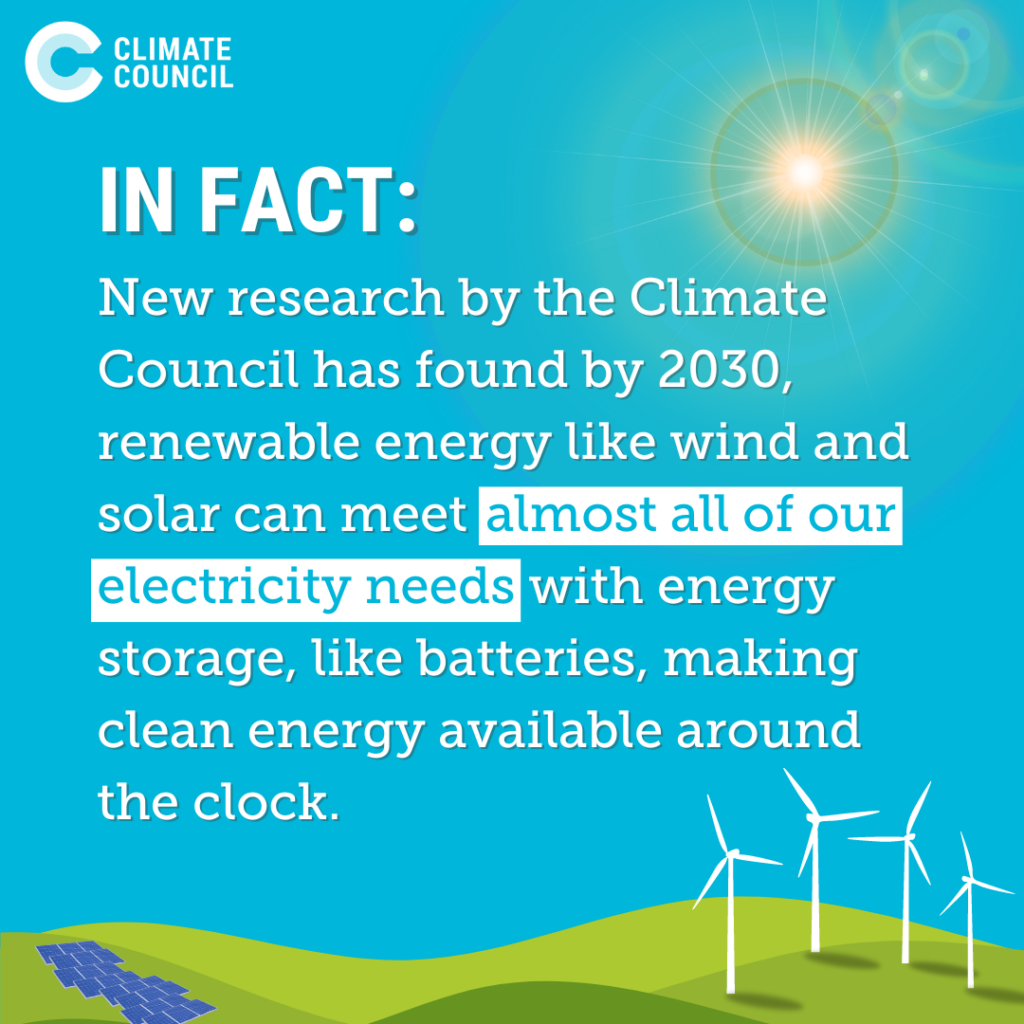
Different types of renewable energy, like wind and solar, complement each other to provide power around the clock. Our energy system will also store energy up at times when it’s abundant through large- and small-scale batteries and pumped hydro, to make it available later on when we need it. In other words, just as it doesn’t rain all the time but we can access water whenever we want, AEMO’s roadmap confirms that a mix of solar, wind, hydro and storage can power our homes, industry and businesses 24/7.
Gas is a polluting fossil fuel which can be just as bad for the climate as coal. As we shift to renewables, expensive gas will only be used to generate electricity at the rare times that other sources aren’t available. Gas is often the most expensive source of energy in the market today, with high prices for this fossil fuel globally playing a big part in driving up household power bills over the past few years.
Find out more about how batteries are supporting our renewable grid in Battery Boom: Supercharging Australia’s Renewable Rollout
6. We need to do more to unlock the benefits of renewables for Australians
While momentum is building, challenges remain in delivering essential infrastructure at the pace required. To meet our climate and energy targets and maximise the benefits for Australians, we need to address the barriers to the renewable energy rollout, including:
- Ensuring the supply chain for critical energy assets and workforces is secured.
- Maintaining investment certainty with targets and policies that support energy infrastructure and investment.
- Ensuring our power system is ready for 100% renewables with technologies to ensure a smooth transition and deliver a secure and reliable energy system.
- Coordinating household solar and storage, so that power is available when it’s needed most, cutting costs for all Australians.
- Building social licence through community engagement, benefit sharing and clear roles.
- Streamlining and enhancing planning and environmental approval processes for infrastructure.
So, what’s the bottom line?
The experts at AEMO say renewable energy from the sun and wind, backed by storage, is the best way to power Australia in the coming decades.
Not only is it our lowest-cost option, it’s also the most reliable and our best bet for getting replacement power online before more coal generators close down. The roadmap underscores that we’re well on the way to building the clean energy system we need.
Australia should stick to the path we’re already on, and accelerate our progress, to deliver a reliable and affordable energy system that can cleanly power Australia for generations to come