Sea level rise and storm surges will cost Australians $855 billion this century and become a constant drag on our economy, according to a new report from the Climate Council based on Australian-first research.
The Rising Seas, Rising Bills report finds climate pollution from coal, oil and gas will raise average sea levels around the country, with coastal flooding damaging 267,000 properties and two million hectares of land this century, including homes, farms, and critical infrastructure across every state, and the Northern Territory.
The report finds:
- Every state and the Northern Territory will bear significant economic costs from rising sea levels, from Western Australia ($230.5 billion) to Tasmania ($7.9 billion).
- Queensland faces the largest overall losses at $214.5bn, followed by Victoria with $167bn, New South Wales at $150.7bn, South Australia $49.2bn and Northern Territory $35.2bn.
- Queensland has the greatest number of properties at risk (93,157) followed by New South Wales (71,210 properties) and Western Australia (51,366).
- Queensland’s Gold Coast alone faces $84.4 billion in projected economic losses as the single most exposed urban area in Australia.
- When coastal flooding hits, most homeowners will wear the costs as standard home insurance generally doesn’t cover ‘actions of the sea’.
Climate Councillor, climate scientist and report co-author Adjunct Professor Andrew Watkins said: “When Severe Tropical Cyclone Alfred hit in 2025, families watched their beaches disappear overnight. It cost the city of Gold Coast $35 million in beach repairs, and communities up and down the east coast are still recovering from the damage.
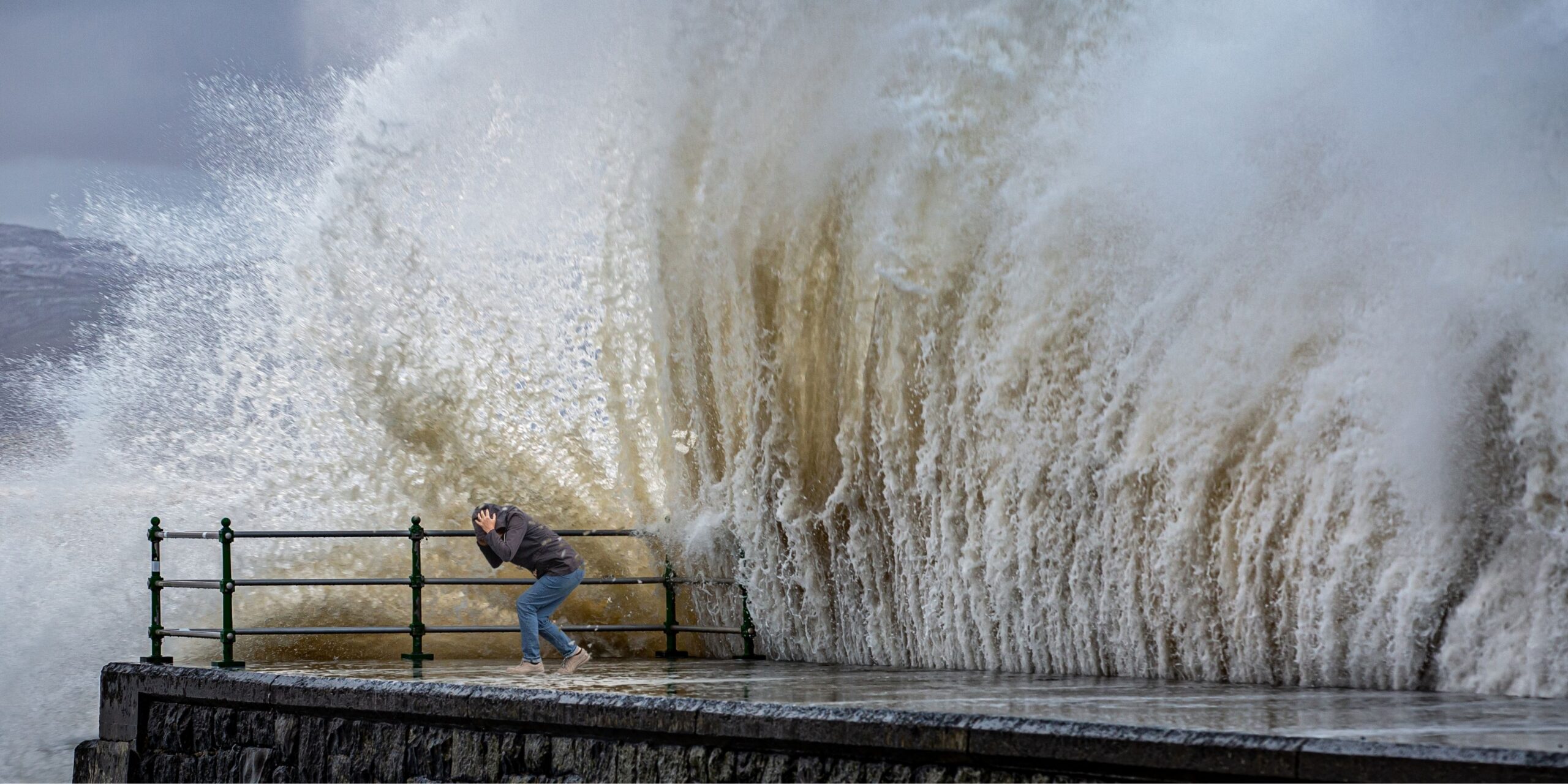
“This is how sea level rise packs a punch, by increasing the impacts of storm surges and coastal flooding that’s hitting communities harder, and more often. The science shows that the most extreme sea levels we see in a typical year now, will occur monthly by 2090. That’s simply too often to repair the damage.
“Every time we burn coal, oil and gas we’re turning up the heat in our oceans and raising sea levels even higher. Powerful storm surges are riding on higher seas, putting more coastal homes at greater risk of flooding every year. This report warns us to expect economic losses in Australia to skyrocket into hundreds of billions of dollars. Worryingly, we can’t rule out sudden changes to ice sheets pushing sea levels much higher than the conservative estimates used in our report.
“Coastal flooding and erosion is already costing communities, and looming as a major, national disaster. Every action matters. Our political and business leaders must cut climate pollution faster, and better prepare coastal communities for the sea level rise already locked in.”
Report co-author and University of Melbourne Professor Tom Kompas, whose underlying research is published in the academic journal Scientific Reports, said communities are unprepared for what’s coming: “Based on current projections, millions of hectares of land are at risk by 2100, and the costs will be substantial with damages including housing, essential infrastructure, ecosystem services and valuable agricultural land.
“Because carbon emissions have remained too high, we have already locked in a certain level of sea level rise,” Professor Kompas said.
“Our least costly option is to avoid building in places where we know the risks are highest, and there’s a lot we can do to restore our coastlines and build in ways that reduce future risks. These are hard, but necessary decisions that communities are already facing.”
Regions likely to suffer greatest economic loss from sea level rise, by state
QUEENSLAND
| Location | Land and assets at risk | Economic losses | Example hotspots | |
| Properties | Land (ha) | |||
| Gold Coast | 32,490 | 6,985 | $84,399 million | Parts of Jacobs Well, Paradise Point, Runaway Bay, Biggera Waters, Mermaid Beach and Palm Beach. |
WESTERN AUSTRALIA
| Location | Land and assets at risk | Economic losses | Example hotspots | |
| Properties | Land (ha) | |||
| Kimberley | 204 | 291,089 | $65,408 million | Parts of Broome, Derby-West Kimberley and Roebuck Bay |
VICTORIA
| Location | Land and assets at risk | Economic losses | Example hotspots | |
| Properties | Land (ha) | |||
| East Melbourne | 1,042 | 22,558 | $68,667 million | Parts of Koo Wee Rup, Braeside, Chelsea Heights and Carrum-Patterson Lakes. |
NEW SOUTH WALES
| Location | Land and assets at risk | Economic losses | Example hotspots | |
| Properties | Land (ha) | |||
| Northern NSW | 17,995 | 60,024 | $55,244 million | Parts of Maclean – Yamba – Iluka and Ballina / Evans Head, Byron Bay (Belongil Spit), Brunswick Heads, Kingscliff / Tweed Heads and Sawtell. |
SOUTH AUSTRALIA
| Location | Land and assets at risk | Economic losses | Example hotspots | |
| Properties | Land (ha) | |||
| North Central | 18,454 | 12,459 | $23,505 million | Parts of Port Adelaide, West Lakes and Port Pirie. |
NORTHERN TERRITORY
| Location | Land and assets at risk | Economic losses | Example hotspots | |
| Properties | Land (ha) | |||
| South West | N/A | 104,088 | $14,127 million | Parts of Daly and Thamarrurr. |
TASMANIA
| Location | Land and assets at risk | Economic losses | Example hotspots | |
| Properties | Land (ha) | |||
| Launceston and North East | 1,224 | 21,321 | 3,259 million | Parts of Launceston (e.g. Invermay, Mowbray), West Tamar (e.g. Riverside, Trevallyn), Devonport, La Trove and Port Sorell. |
ENDS
For interviews please contact Jacqui Street on 0498 188 528 or contact the Climate Council media team on media@climatecouncil.org.au or call 0485 863 063.
To speak to case studies including farmers, seafood growers and local councillors impacted by sea level rise contact Sean Kennedy from the Climate Media Centre 0447 121 378.
The Climate Council is an independent, community-funded organisation. We provide evidence-based information on climate change impacts and solutions to journalists, policymakers, and the wider Australian community.
For further information, go to: climatecouncil.org.au