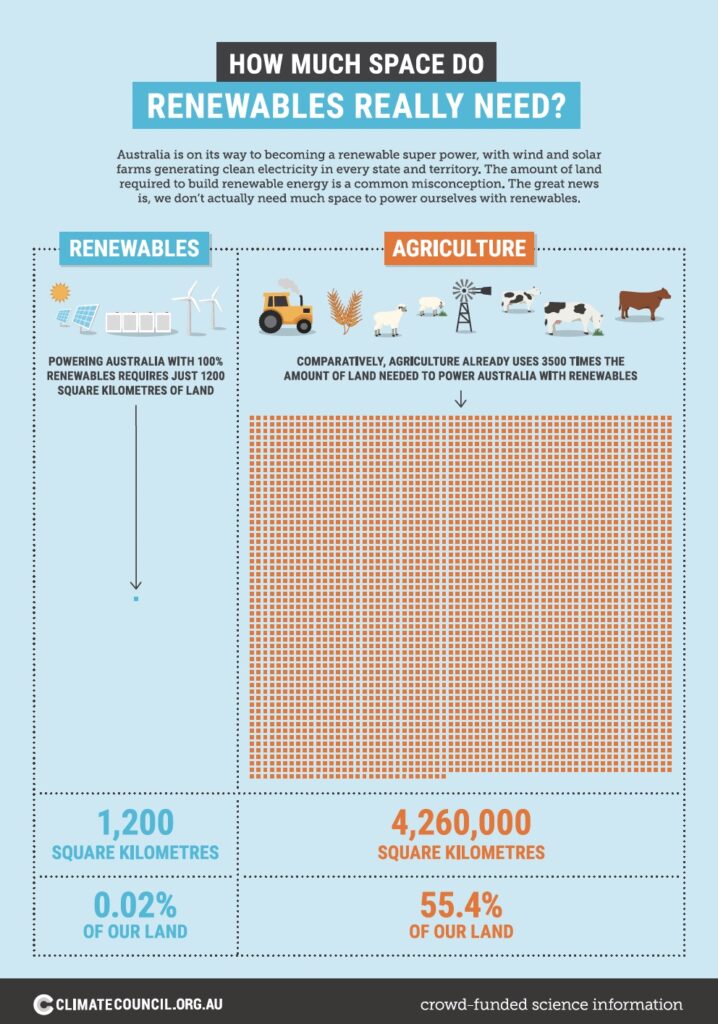
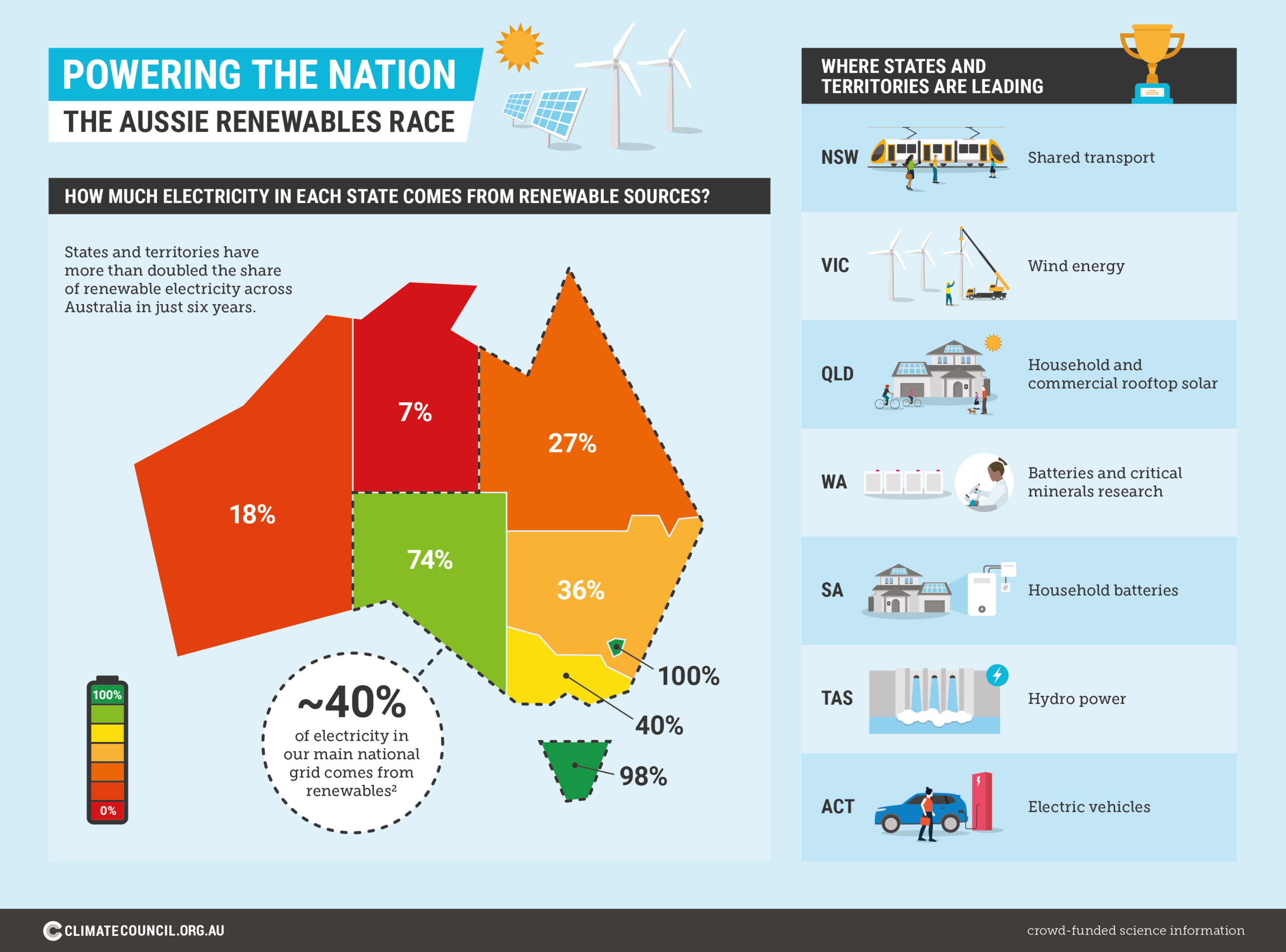
Every day, more Australians are powering their lives with clean energy. Our shift to renewable electricity, like solar, wind and battery storage, is well underway and accelerating rapidly.
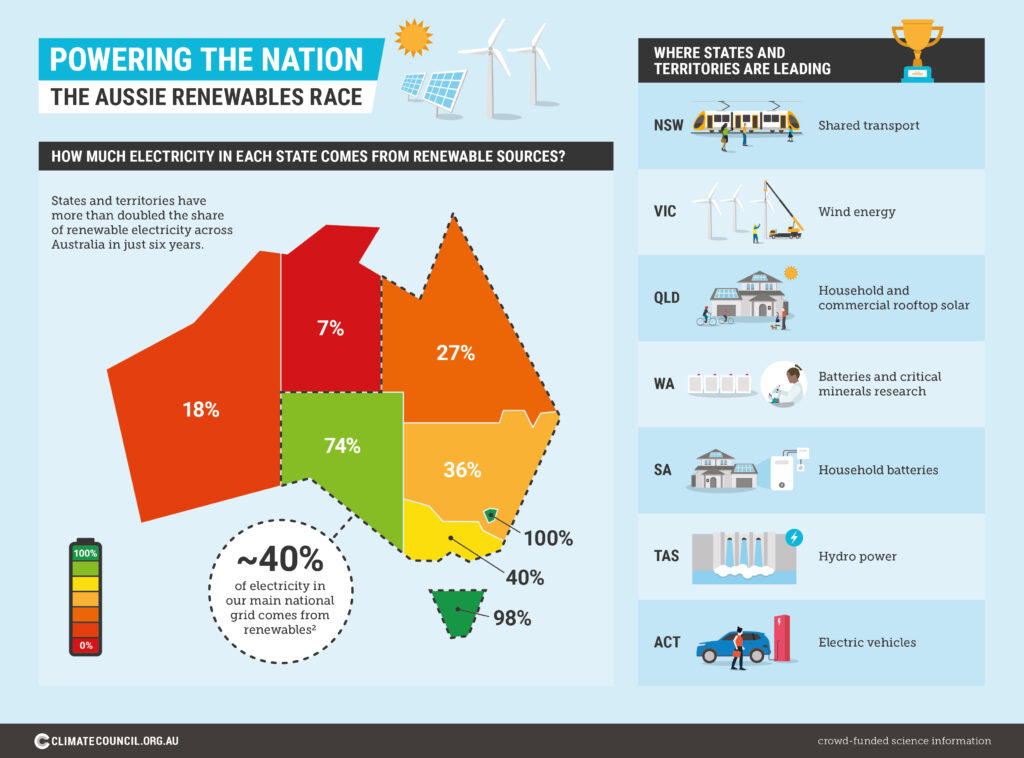
In fewer than five years, Australia has doubled the share of renewable electricity in our main grid and, today, more than 3.6 million Australian households have installed rooftop solar to reduce their power bills and slash climate pollution.
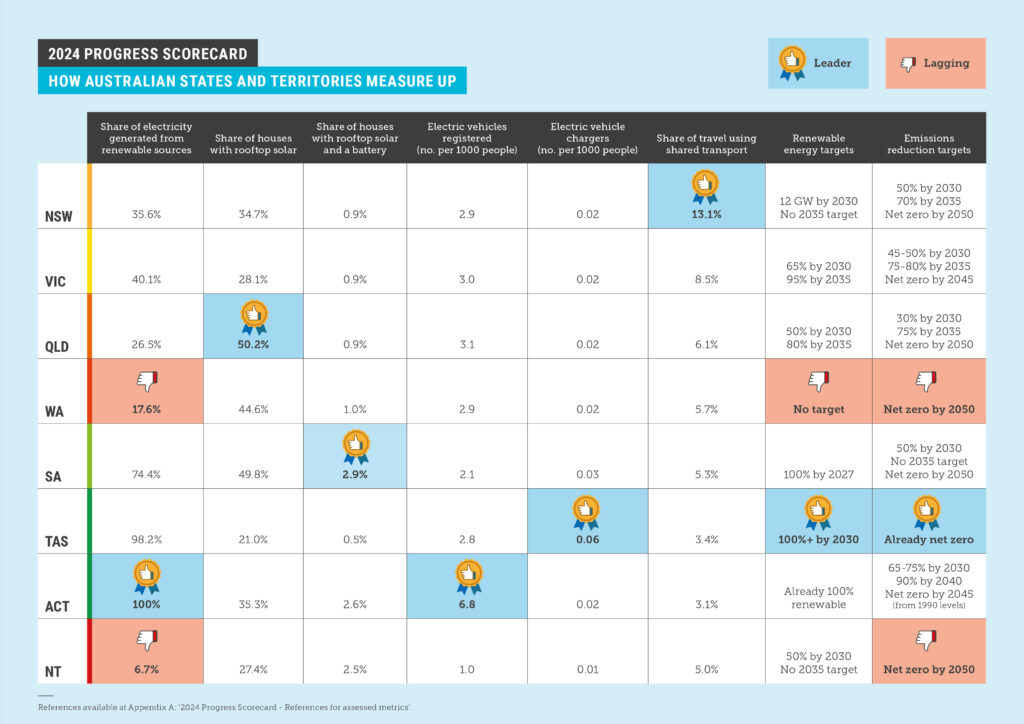
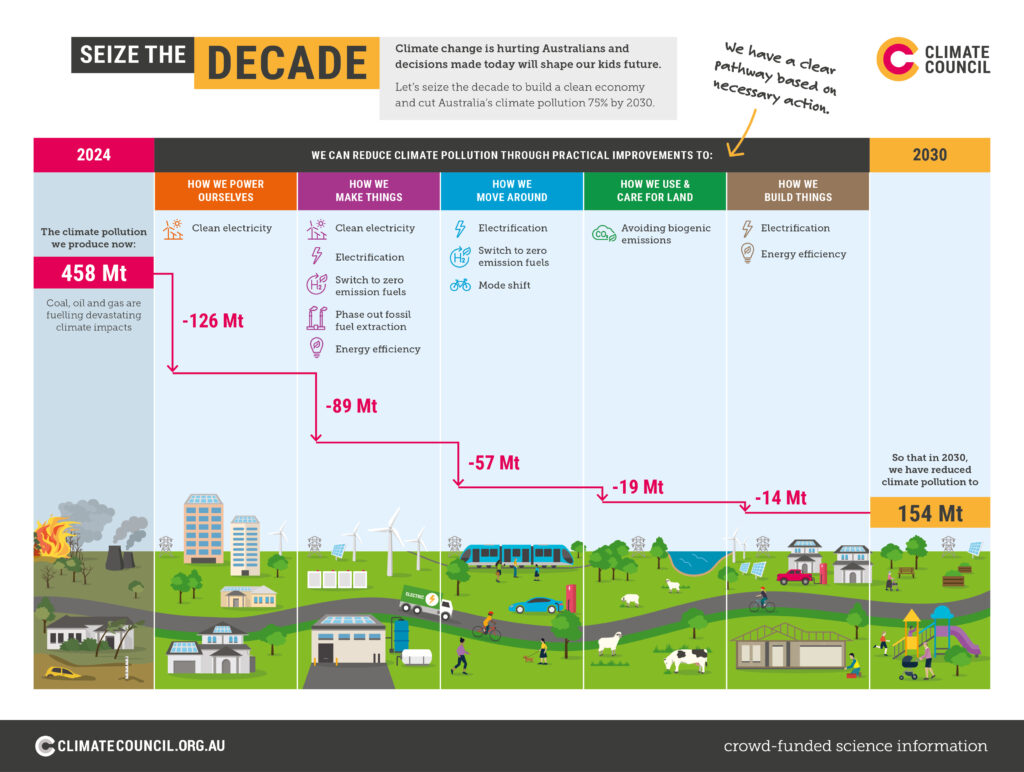
Nowhere is our rapid shift towards an economy powered by renewable energy more visible than at the state and territory level, where governments, communities and households are leading the charge towards a cleaner, safer future for our kids. This transformation is dynamic, with different states and territories leading the way on different aspects. Most importantly, the collective result of these efforts is that we are well on the way to meeting Australia’s national climate pollution reduction target of 43% by 2030.