
Fossil fuels leave our energy security at risk, while renewables protect us.
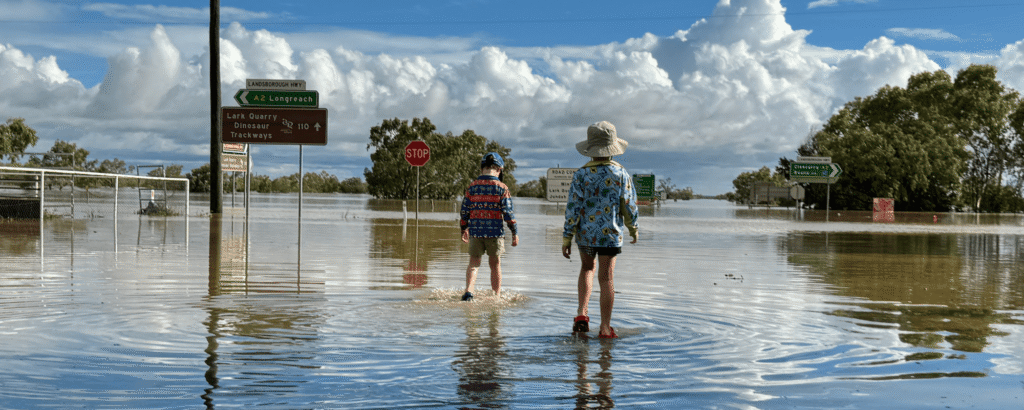
Across Australia, households are being hit by another global fuel shock – the second time in just four years. As the US-Israel war on Iran unfolds, it is not only causing devastating impacts throughout the region, but is disrupting energy markets, pushing up prices and threatening people’s livelihoods the world over.
Australia cannot control global conflicts, but we can control how much they hurt household budgets. Right now, our heavy reliance on fossil fuels means international crises quickly translate into higher costs at home – from the bowser to the price of everyday goods.
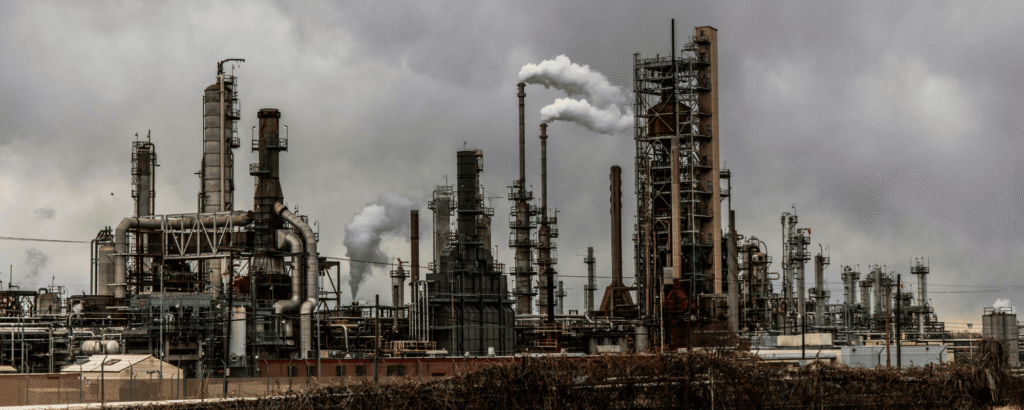
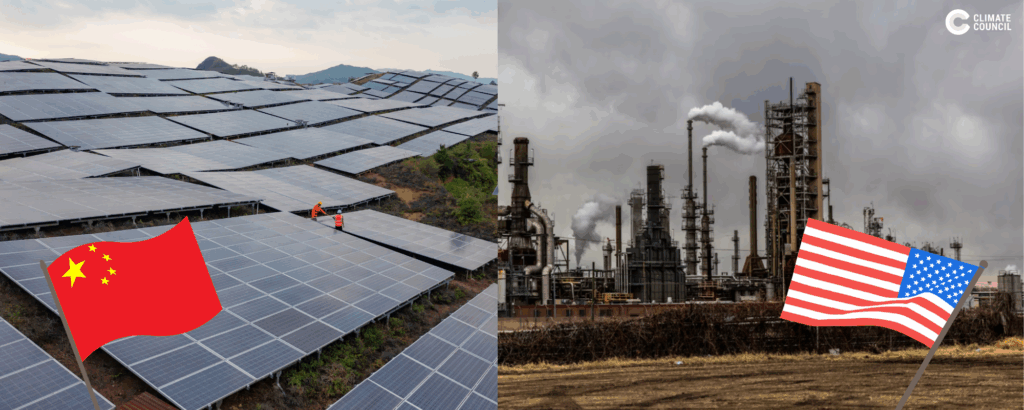
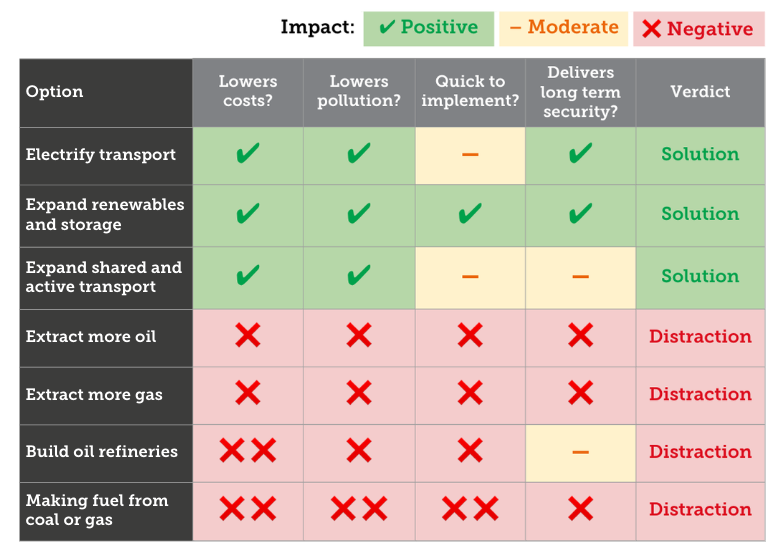
The good news is the solutions are already here. Renewables and electrification are already protecting many Australians from price pain. The alternative – more coal, oil and gas – is expensive, polluting, and won’t improve Australia’s energy security.
This May budget can deliver permanent improvements – not just temporary fixes. A step-change, focused on electrification, renewables, batteries, and cleaner transport, can cut fossils fuel dependency permanently. This is the only way to deliver lasting energy security, lower costs and cuts to climate pollution.
Key findings
1. Australia is badly exposed to global fossil fuel shocks, and households are paying the price.
- Australia imports 90% of our refined fuels. Relying on imported oil and exported gas means international conflicts quickly translate into price rises and insecurity at home.
- In response to the Iran war, petrol prices have surged by almost 50%, and diesel prices have jumped more than 70%.
- Increased fuel prices cost motorists more than $1 billion in March, above their normal fuel costs.
- Rising fuel costs are flowing through the entire economy, raising the price of food, goods and essential services. With diesel now sitting above $3 a litre, prolonged disruption could increase road freight costs by 20-30%.
2. The best energy security solutions are already here, protecting Australians and cutting bills.
- Electric and hybrid vehicles are already reducing Australia’s reliance on imported fuels, avoiding almost 15 million litres of petrol and diesel use every week – freeing up the equivalent of 325 fuel truck deliveries.
- Electric and hybrid owners are also saving money: avoiding about $50 million in fuel price spikes in March. Everyday Australians in in the outer suburbs are benefiting the most from government support to purchase EVs.
- At the same time, renewables and storage are cutting gas use and lowering power prices. In the past four months, big batteries alone have reduced gas use in our main grid by 8.1 petajoules, equivalent to the annual gas use of 163 thousand Victorian homes.
- Using less coal and gas saves everyone on their power bills – this summer, wholesale electricity prices fell by around 30% compared to the previous summer. Households with solar and batteries are seeing even greater benefits, cutting power bills by up to 90%.
3. More coal, oil and gas is expensive, polluting, and will not improve Australia’s energy security.
- Australians pay international prices for coal, oil and gas – and increasing supply won’t break this link.
- Australia has already used 90% of our conventional crude oil reserves, and what’s left wouldn’t even meet our needs for a year.
- Fossil fuel development is slower, more expensive and more polluting than increasing supply of renewable power.
- Australia already produces more than enough gas for domestic use, but we export 80% of it, and our high prices at home are linked to global markets.
- Since we started exporting gas from the east coast, gas prices have almost quadrupled despite production almost tripling, and demand falling 10%.
4. With smart policies, governments can deliver lasting energy security.
- Short-term measures – like fuel excise cuts and emergency stock releases – provide temporary relief but do nothing to reduce our exposure to costly and risky fossil fuels. Without structural change, households and businesses will keep paying higher prices.
- Key budget principles that would deliver immediate and lasting savings and energy security include:
- Reduce fuel dependence with electric vehicles, shared and active transport.
- Power heavy industry with Australian renewables, not imported diesel.
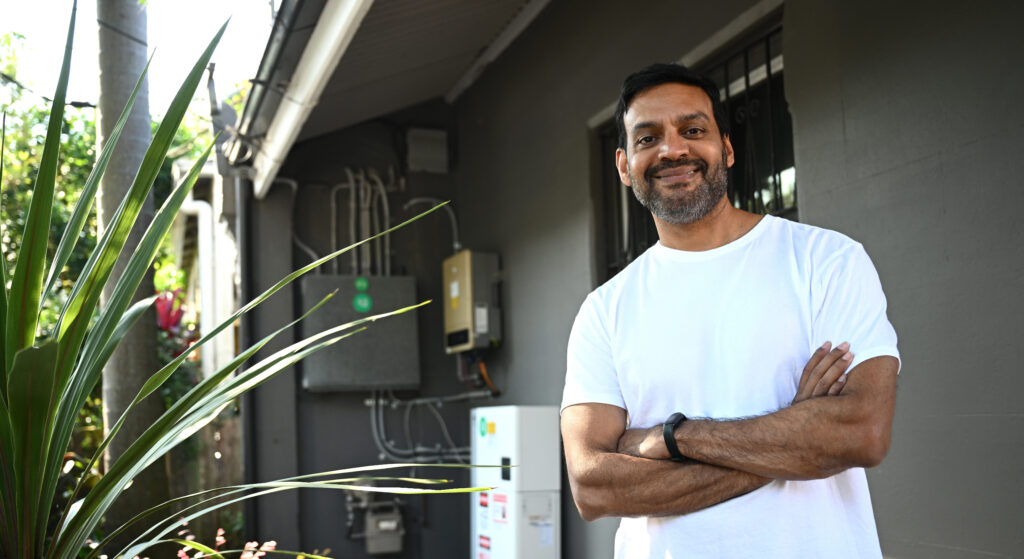
- Cut household bills with electrified homes, solar and batteries.
- Make gas corporations pay their fair share of tax.
A more secure, affordable energy future for Australia
Energy security is not something we can take for granted. Recent years have shown how quickly global shocks can drive up energy costs and expose how vulnerable we are due to a reliance on imported fuels.
Fortunately, there is a clear path forward. Moving faster on renewables and electrification will reduce our exposure to global volatility, while making energy more affordable and reliable for households and businesses.
Many Australians are already enjoying the benefits of rooftop solar, storage, and electrification. The upcoming budget in May is an opportunity to build on and extend those savings and benefits across the country.
In making the right choices, the Australian Government can better shield households and businesses and deliver lasting cost-of-living relief, all while cutting climate pollution and building a safer future for our kids.