Power bills have become a growing source of stress for Aussie families and businesses. Many families are forced to make impossible choices: three in 10 parents are struggling to afford basics like food, electricity and insurance. Government rebates provided some relief, but this was only a band-aid solution.
This year, many of us will be paying significantly more than we have been over the past 18 months as the energy bill rebates come to an end. It’s clear that the way we power ourselves is no longer working for Australian communities and businesses.
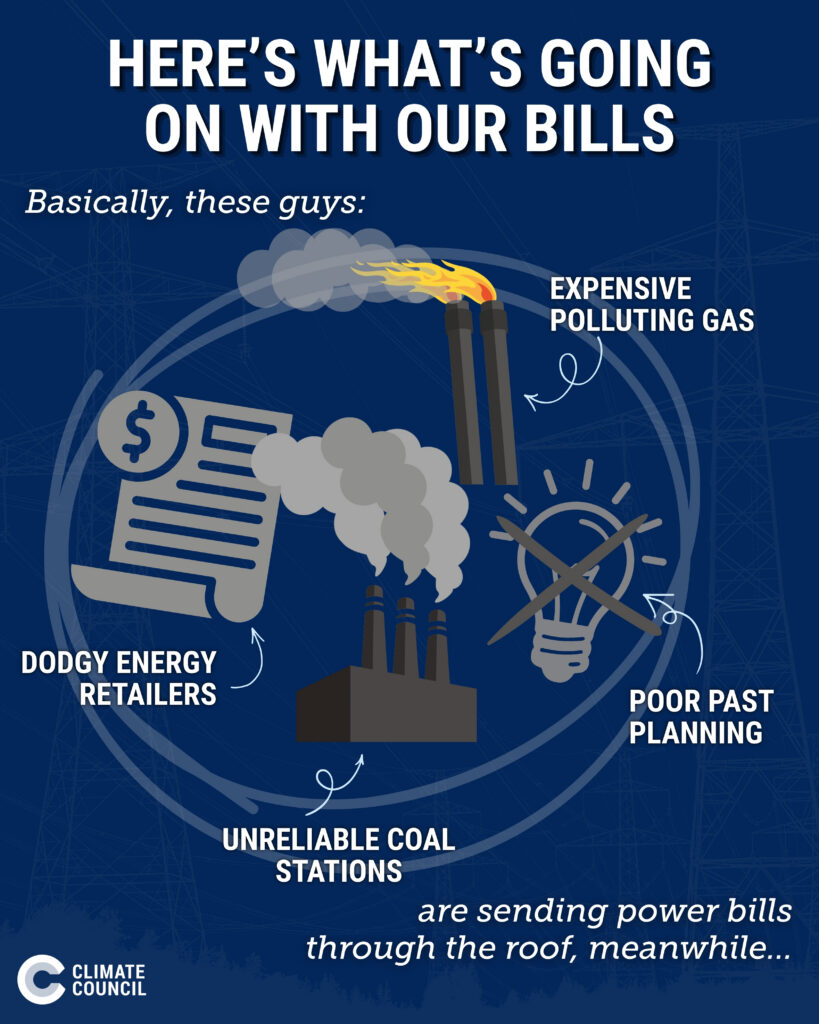
Power prices are complex, and it can be hard to know what’s really going on. In short, there are three key drivers behind our high power prices:
- Australia remains heavily reliant on ageing coal-fired power stations and expensive gas, and that dependence is pushing power prices higher.
- Since Australia began exporting gas from the east coast gas prices have surged, leaving Aussies exposed to volatile international markets. At the same time, Australia’s ageing coal fleet is breaking down more often, driving some of the worst price spikes seen in recent years.
- Network costs surged between 2007 and 2015 thanks to years of unnecessary overinvestment in our poles and wires, which we are still paying off.
- Millions of Australians are being overcharged for electricity in a system that penalises loyalty.
- Australia’s largest polluters are among the biggest culprits, and have recently been fined for overcharging and misleading customers.
Key Findings
1. Expensive and polluting gas is the main reason electricity prices are so high.
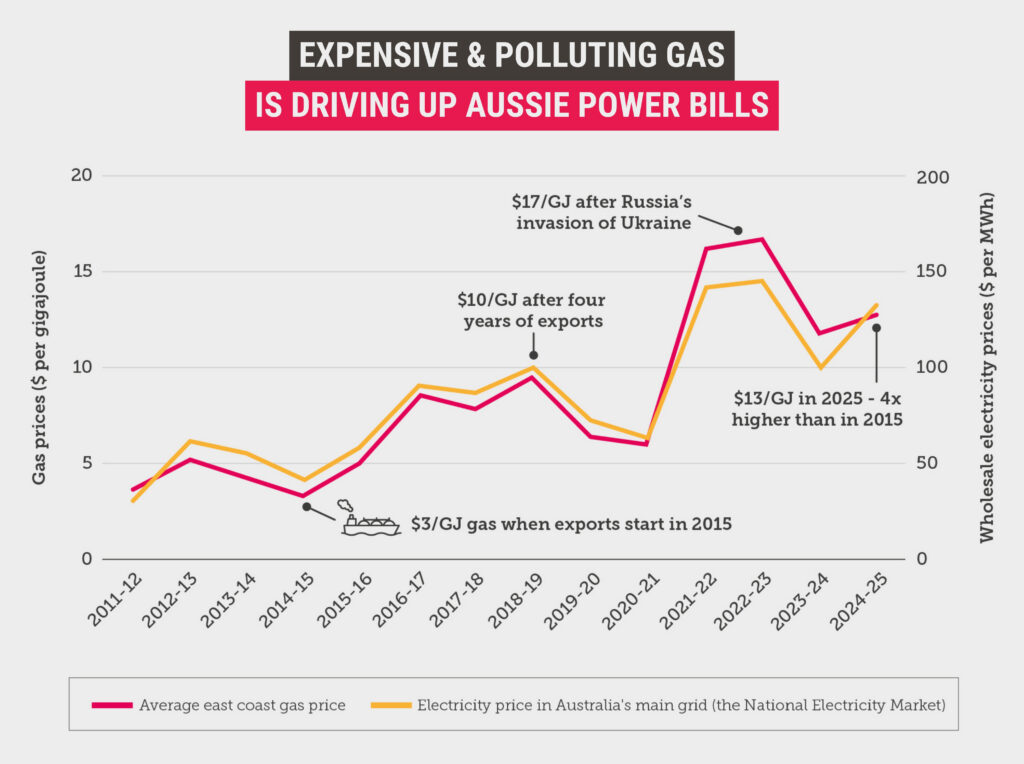
- Domestic gas prices have surged since Australia began exporting fossil gas from the east coast in 2015, exposing households to volatile global markets.
- Gas prices and wholesale electricity prices rise and fall together. Although fossil gas provides only around 5% of electricity in Australia’s main grid, it sets the wholesale electricity price up to 90% of the time.
- Since Russia’s invasion of Ukraine, gas exporters have made close to $100 billion in extra revenue, while many Australians have struggled to keep up with bills that have grown by more than $400 dollars (29%) on average.
2. Ageing and polluting coal power stations are driving the biggest electricity price spikes.
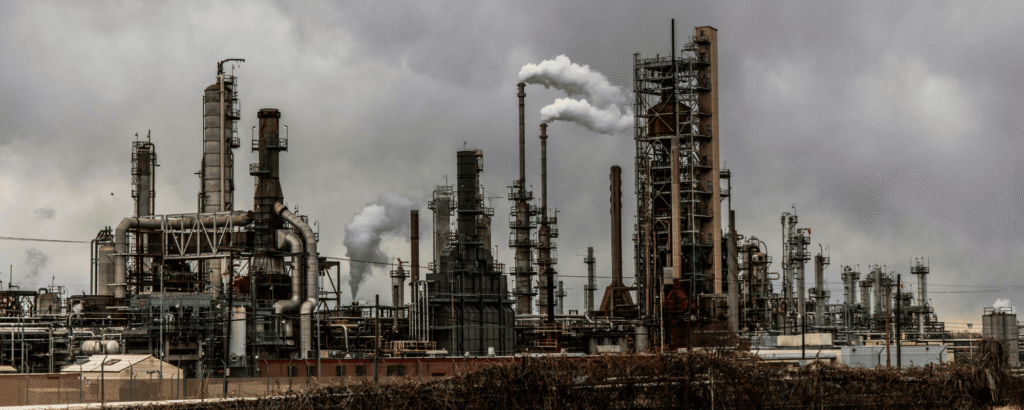
- Most of Australia’s coal power stations are more than 40 years old. That’s near or beyond their expected operating life, and they are frequently breaking down.
- Units at NSW’s Eraring power station are out for more than 6,000 hours (more than 8 months) every year on average. In total last year, there were coal outages in both NSW and Queensland equivalent to every unit in these states being offline for more than 80 days, while Victoria was not far behind on 70 days.
- When coal generators fail, the system relies more heavily on expensive fossil gas, which contributes to prices sharply rising. Five of the most severe electricity price spikes in recent years were caused by unexpected coal outages.
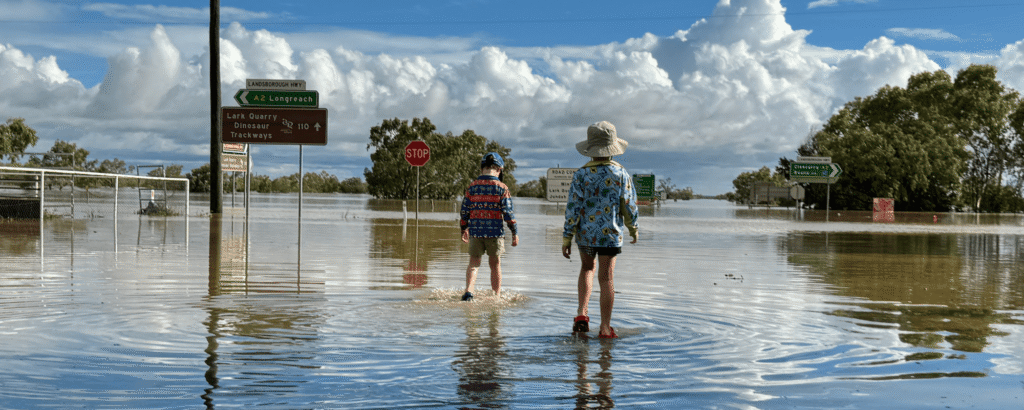
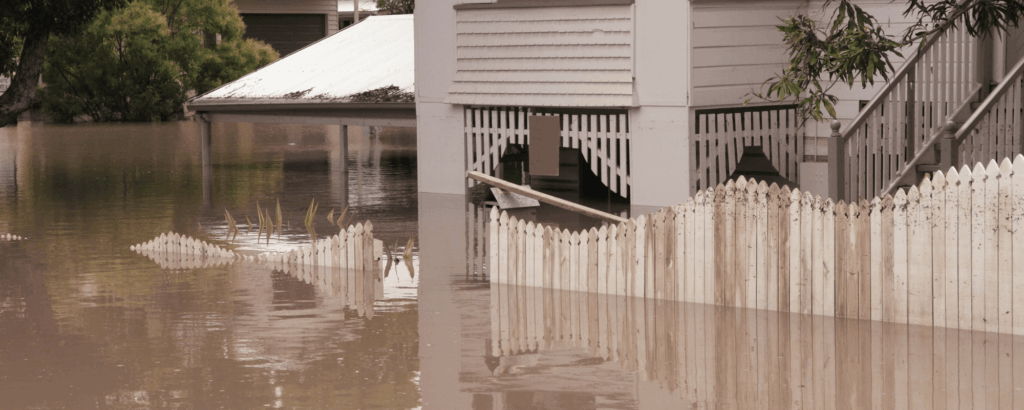
- Coal-fired power stations are among Australia’s largest sources of climate pollution. This is worsening extreme heat, bushfires and other climate impacts that add to household costs.
3. Millions of Australians are paying too much for electricity because the system penalises loyalty.
- Our biggest energy retailers are also some of the country’s biggest polluters, making huge profits from their operation of gas and coal generators as well as retail margins.
- The total annual profit of the big three gentailers is enough to cancel the debt of all Aussies struggling to pay their electricity bills 7x over.
- Around 2.5 million households (37%) are paying more than they should for electricity. These households could save $291, on average, by switching to a better offer. Australians who stay on the same electricity plan for more than three years are paying a “loyalty tax”: on average paying $221 each year more than those on new plans.
- South Australians who stick with their retailer paid the highest loyalty tax of $408, followed by those in NSW ($303), Victoria ($269) and Queensland ($213).
- In the past 12 months, at least 14 retailers were found to be in breach of consumer protection laws, affecting at least one million people and costing them almost $55 million.
4. Clean electricity is already cutting pollution and power bills for many households across the system.
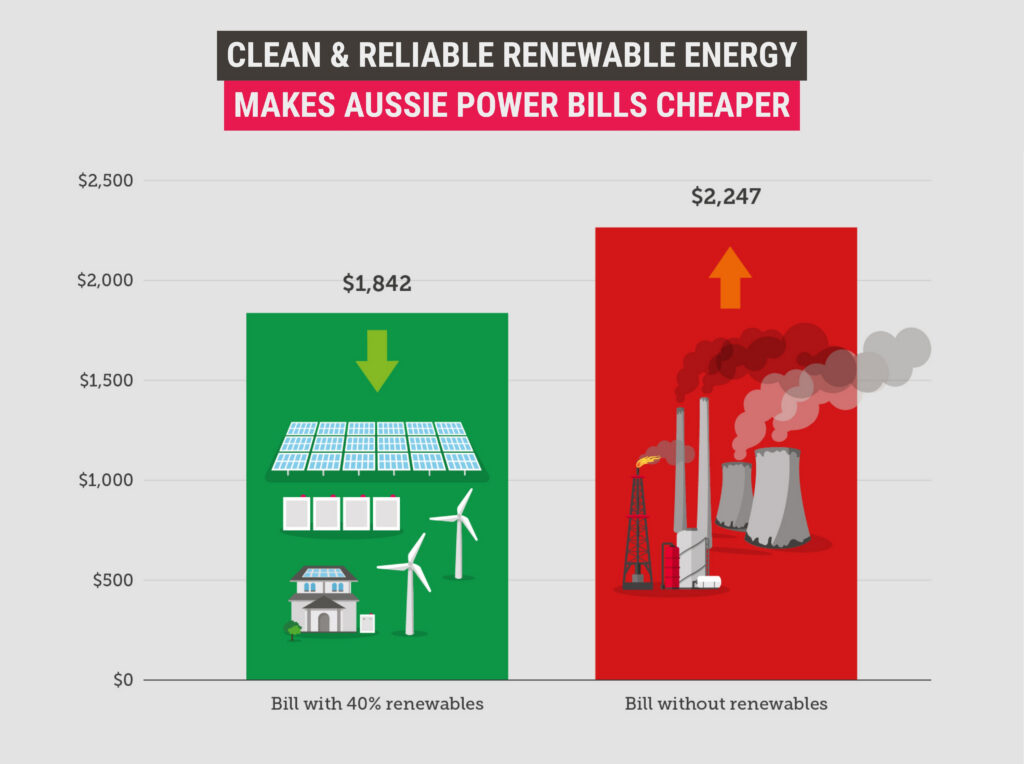
- The renewables in our grid lowered average household electricity bills by up to $417 in 2024, collectively saving households up to $3.8 billion in just one year.
- Renewables and storage now provide close to 45% of electricity in Australia’s main grid, which is driving down wholesale prices.
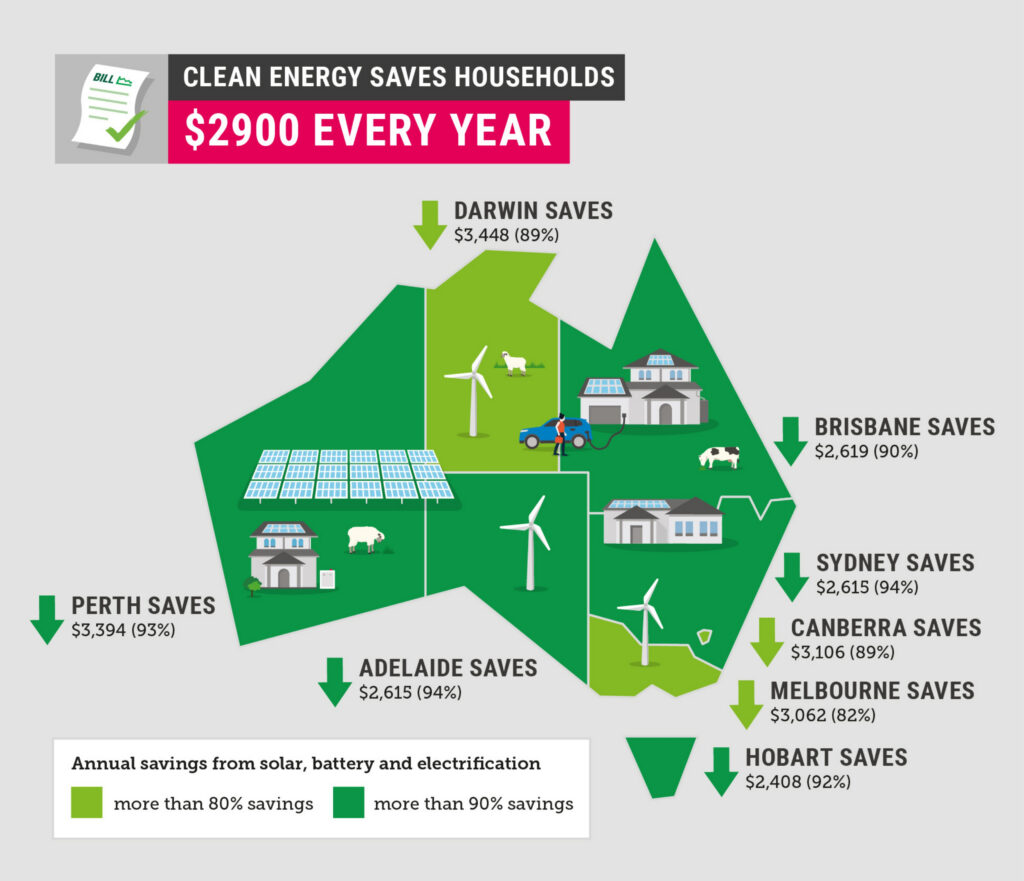
- As temporary energy rebates end, households without access to clean electricity are more exposed to rising bills and price shocks. For example, the median household bill in 2025 was $2,467. With energy rebates that dropped to $1,917 on average, nationally, whereas solar and a battery can reduce bills by up to 90%, or down to just $247.
- More than four million (one in three) households have rooftop solar, saving about $1,500 a year on average on electricity bills. In the last half of 2025, nearly 185,000 households installed home batteries, which boosts savings and reduces exposure even more.
5. Governments need to get on with rolling out renewable energy and storage, and ensure the benefits are shared by everyone.
- Past planning failures added unnecessary costs into power bills, with household bills rising 44% by 2016 due to overinvestment in electricity networks — costs that are still being paid off today.
- New transmission that connects us to abundant, low-cost renewable energy is different: it is expected to deliver net, national savings of around $24 billion by 2050 compared with not building it.
- Expanding renewable energy, storage and transmission reduces exposure to volatile fossil fuel prices and lowers long-term costs for households and businesses.
- Governments across Australia have played a critical role in building clean energy. Now it’s time to accelerate that momentum, scale up action, and:
- a) ensure all Australians – including renters, people in apartments, and low-income households – can share in the benefits; and
- b) introduce stronger protections so savings flow through to people’s power bills, rather than being absorbed by retail margins.
looking to the future:
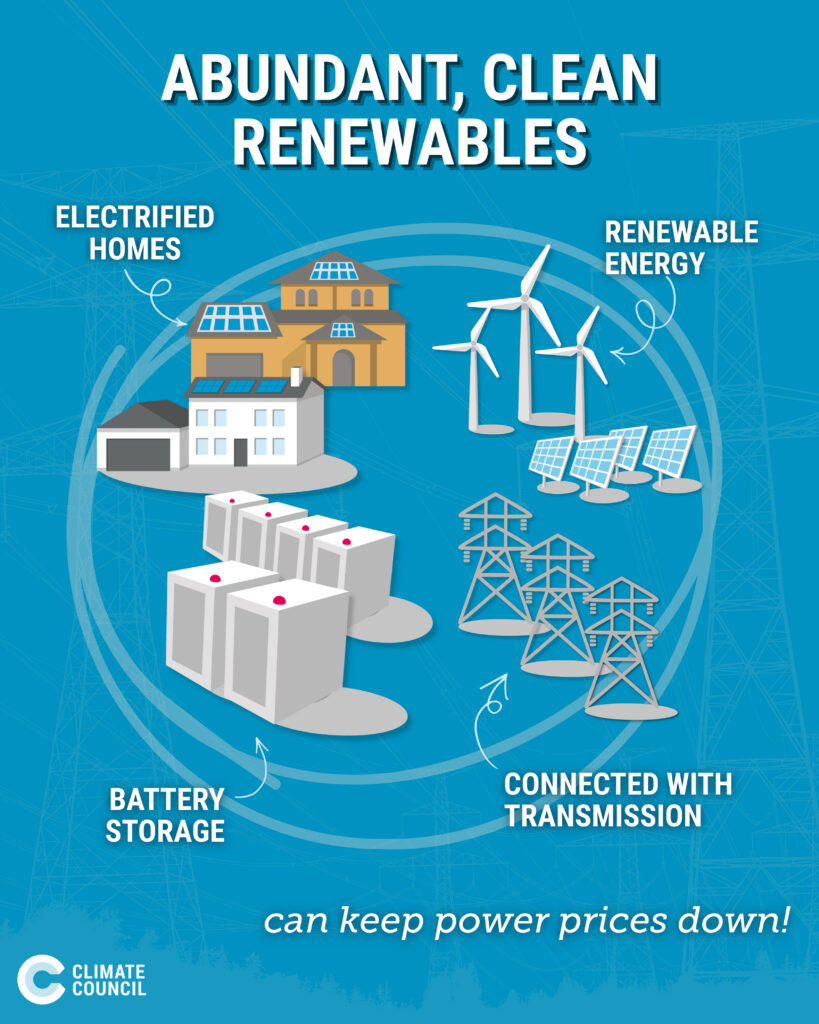
More renewable energy offers a clear solution. Unlike fossil fuels, they rely on a free and abundant source of energy, and are not subject to global price shocks. Solar and wind projects are far cheaper to build and operate than new coal or gas projects, and so provide the cheapest source of power available. Backed by storage like batteries and pumped hydro, renewables can power our homes, industry and businesses around the clock. The new transmission needed to connect renewable energy is expected to deliver net savings to homes and businesses. And, by installing rooftop solar, batteries and ditching gas, households and businesses can take back control of their energy and cut their bills by up to 90%.
Renewables and storage now provide, on average, nearly 45% of electricity in Australia’s main grid, and the share of renewables is growing rapidly. Over summer, they’ve provided more than half of our power for the first time. Thanks to the high share of renewables, wholesale prices nearly halved in the last three months of 2025. Power bills are tipped to fall by 5% over the next five years as we pick up the pace. Renewables are powering ahead, but the switch to cleaner, cheaper power, and its bill-busting benefits, isn’t yet guaranteed. Delays, hesitations, or u-turns all threaten to increase Australian’s power bills. However, the opposite is also true – accelerating the rollout of renewable power can keep bills as low as possible, all while boosting energy security and cutting climate pollution.
With one third of Australians struggling to stay on top of their energy bills, and just four years left in this critical decade for climate action, it’s time to double down on the switch to renewable power.