
The Climate Council welcomes the opportunity to make a submission to the Senate Environment and Communications References Committee inquiry into artificial intelligence and data centres. As Australia’s leading, independent voice on climate science, impacts and solutions, we hold significant concerns about the impacts that the new wave of data centre development, driven in large part by a surge in demand for artificial intelligence, could have on our shift to renewables, our climate, and our water resources – unless our governments act now.
The data centre boom is occurring during a critical shift from fossil fuels to renewable energy to cut climate pollution and keep communities safer from worsening fires, floods and extreme heat. Climate-fuelled disasters across Australia are already more frequent and intense, and communities are living with the consequences. In New South Wales, the most recent budget showed disaster costs in that state have increased 1000% since the Black Summer bushfires of 2019/20. Unless we accelerate our switch to clean alternatives, and away from coal, oil and gas, events like these will continue to escalate.
Right now, governments are actively supporting data centre and AI infrastructure development, while acknowledging the importance of sustainable growth. While some work is underway, current regulatory and planning frameworks do not yet provide sufficient safeguards to ensure data centre growth does not put our energy or climate targets at risk.
The Climate Council’s latest report, Clouded future: Managing the risks of the data centre boom sets out the risks that poorly managed data centre development poses for our climate. Our report found that:
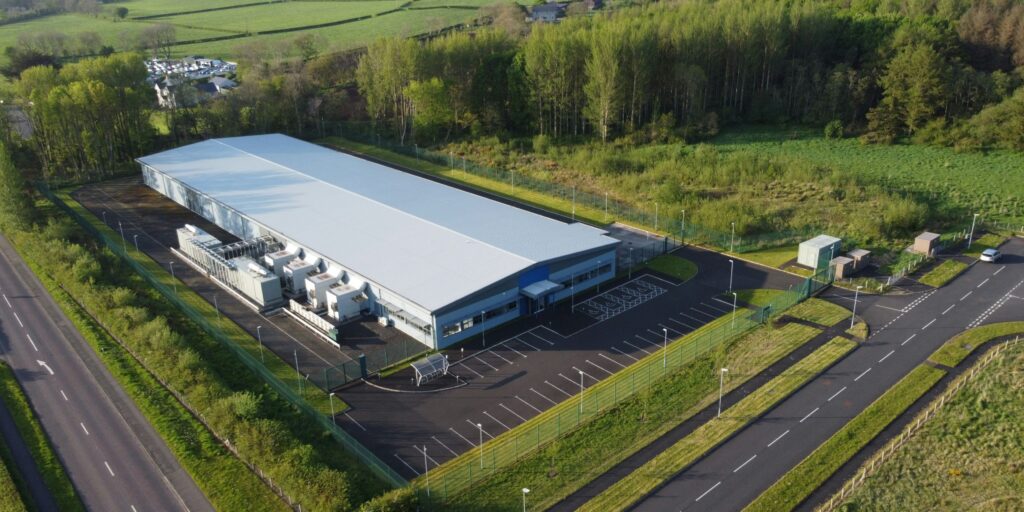
- There are already 162 operational data centres, and at least 90 proposed new data centre projects in Australia.
- The data centre industry is already a significant energy user, and demand is expected to triple by 2030. By then, the industry could comprise 6% (12 TWh) of electricity demand in our main grid, around enough to power all the homes in Victoria.
- Data centre energy demand has already nearly doubled in Victoria in the past 12 months, and risen 18% in NSW. If all proposed projects in Australia were to go ahead, their total maximum demand would be more than 21 GW – or more than seven times the capacity of Eraring, Australia’s biggest coal-fired power station.
- Water demand from this industry is also surging as Australia’s climate is becoming hotter and drier. The industry estimates its water demand will triple by 2030.
- Without intervention, data centre electricity demand will be met by more polluting coal and gas; delaying the retirement of ageing and unreliable coal stations and increasing reliance on expensive fossil gas. By 2035, this could lead to:
- our national electricity grid being 14% more polluting than it otherwise would be
- wholesale power prices rising across Australia – as high as 26% in NSW and 23% in Victoria.
Governments and industry have a critical window of opportunity to ensure data centre growth does not derail the progress we are making toward our climate goals.
Industry, governments at all levels, regulators and system operators all have a role to play in mitigating the risks associated with poorly managed data centre growth. While the Australian Government’s expectations for data centres are a signal to the industry, strong, enforceable requirements are needed. State governments, regulators and utilities are where key decisions around data centre approvals and connections are made.
Embedding robust, nationally consistent sustainability criteria for data centres into policy and regulatory frameworks will reduce the risks associated with data centre growth, while also providing greater clarity and certainty for investors. Strong policy settings would bring Australia in line with other jurisdictions around the world including the European Union and Singapore.
Data centre operators and their customers have significant financial capacity, and many are already taking steps to source renewable energy and increase water and energy efficiency. They are well-placed to meet strong regulatory requirements.
Our report makes seven key recommendations to apply to all future data centres in Australia, including those already under assessment. Central to protecting Australians from worsening climate harm and power price spikes is a requirement for data centres to support additional renewable energy and firming capacity to match their demand – beyond what would have been built without the industry’s demand and support.
Importantly, our work considers the intersection of data centre growth with Australia’s shift to renewables, climate targets, and water resources. The responsibility to address these issues lies with both data centre operators, and the customers – including global technology and AI companies – that lease these spaces, and are driving the surging demand for new data centre infrastructure. We acknowledge the range of additional environmental, social, ethical, economic and work force concerns relating to data centres and AI, and the importance of taking action to address them alongside managing the climate and energy impacts of data centre infrastructure.
Climate Council recommendations
1. Require data centres and their customers to support additional renewable energy and firming capacity to match their demand
Building on the industry’s proactive work to offset its energy use, and ECMC’s agreement that data centres should invest in additional renewable generation and firming capacity, data centres in Australia must be required to support the development of new wind, solar and firming capacity. This new capacity must be beyond what would have been built without the industry’s demand and support – reflecting both the scale of their electricity demand and their capacity to contribute to system-wide outcomes.
Implementation of this requirement should include:
- Establishing credible mechanisms to demonstrate additionality, for example requiring data centres to provide evidence of pre-financial close Power Purchase Agreements (PPAs) as the primary mechanism. Renewable Energy Guarantee of Origin (REGO) certificates may be used alongside PPAs to ensure ongoing location and time-matching of renewable supply.
- Ensuring investment underpinned by data centres is additional to projects already supported through national, state and territory energy schemes, including the Capacity Investment Scheme.
- Working with stakeholders to develop mechanisms to ensure both data centre operators and their customers are accountable for meeting requirements, in ways that support effective renewable investment. For example, this could be underpinned by a requirement for anchor tenants to provide information to government and utilities as part of grid connection and planning assessment processes.
- Incorporating a reasonable transition period of up to three years for new facilities to scale up to 100% renewable procurement as soon as possible from the commencement of operations. Throughout this transition period, operators and customers could be encouraged to contract PPAs with existing generation and storage, noting a significant volume of existing PPAs are expected to retire in the coming years. This approach would account for practical delivery realities between renewable projects and data centre developments, while ensuring direct renewable electricity procurement and investment, rather than offsetting.
- Safeguards to ensure that at a minimum, any new data centre’s energy use is no more emissions-intensive than the grid from day one of operations. This must include rules to prevent data centre operators from building off-grid fossil fuel generation, which would be a material step backwards for our shift to renewables.
2. Make best-practice energy and water efficiency ratings the standard for all data centres
Many data centres already seek to optimise their water and power use. However, there is a clear role for government to reinforce and standardise these efforts by setting consistent, transparent performance benchmarks. This could include, for example, requiring a minimum five-star NABERS Energy rating, alongside a defined Water Usage Effectiveness (WUE) threshold. As part of this, data centres should be expected to maximise the use of alternative water sources – including recycled water and on-site water harvesting – wherever feasible.
Clear outcome-based standards would provide greater certainty for industry, create a level playing field, and build public confidence that data centres are using energy and water resources responsibly. There can be trade-offs between energy and water efficiency, and cooling requirements vary depending on the local climate. Governments should work with industry to develop standards that drive the highest possible efficiency outcomes while allowing data centres to be designed appropriately for the local infrastructure, resources and needs. These benchmarks should be regularly reviewed and progressively strengthened to reflect technological advancements and evolving industry and international best practice.
3. Require data centres to use flexible demand, backed by renewable solutions
Data centres should be integrated as active, flexible participants that enhance grid stability, rather than strain it. Through the ECMC, all Australian jurisdictions except Queensland have agreed that data centres should provide demand flexibility services to avoid additional costs being borne by consumers, and have tasked the AEMC with developing advice on implementation options.
Reliance on fossil diesel backup generators should be minimised as far as possible as part of demand flexibility requirements, for example through co-location with battery storage and adoption of alternative fuels. Necessary policy and reforms to support the development and adoption of low-emissions fuels and battery storage should be considered alongside this.
Where possible, data centres should also be encouraged to manage their workloads in ways that support the grid, for example shifting non time-sensitive workloads to the middle of the day, while performing only essential tasks – or drawing on battery storage – during the evening peak.
4. Ensure data centres pay for the energy and water infrastructure they need to protect households from rising bills
In Australia, data centres are already required to pay for network and water infrastructure upgrades that directly benefit their site. However, where augmentations are required in shared infrastructure, cost recovery is more complex, and the costs may be borne by homes and businesses.
Frameworks must ensure the data centre operators and customers, rather than homes and businesses, absorb these costs. Australian governments are working to review cost recovery arrangements to ensure data centres cover network upgrades and data centre growth. An equivalent review should be undertaken in relation to water infrastructure, ensuring data centre growth does not shift avoidable costs onto households.
While regulatory regimes are reviewed and actioned, water and energy utilities should be encouraged to negotiate agreements with developers that ensure data centres pay for any infrastructure upgrades required.
5. Increase transparency of the magnitude of current and future water consumption, energy use and climate pollution
Reliable and transparent information on the magnitude of both current and future demand is a critical foundation for effectively planning for and reducing impacts.
While Australia’s largest data centre operators are required to report on their energy use and climate pollution through the National Greenhouse and Energy Reporting Scheme, operators below the reporting threshold are not captured, there is very little transparency of customer energy and water use and emissions, and information on water use remains a gap.
The significant variation between industry and institutional forecasts shows there is a need for governments at all levels, and industry, to work together to develop a nationally consistent framework that balances commercial sensitivity and security considerations with best practice reporting standards.
ECMC is already working to improve AEMO’s visibility of data centre energy demand. The NSW Government has indicated it intends to collaborate with industry to improve approaches for forecasting both water and energy demand, including by aligning assumptions. The data centre industry has also recently published its own estimate of Australia’s pipeline capacity to inform policy and planning.
We can build on this momentum to set up a framework for nationally consistent reporting for both data centre operators and customers, including on electricity use, water use, backup generation and climate pollution. As part of this, a consistent approach to forecasting should be developed to allow governments, regulators and utilities to better coordinate and plan for data centre development.
6. Explore options to encourage best-practice regional data centres
Governments should explore options to encourage data centre development in regional Australia where appropriate, particularly in areas with strong renewable energy and water resources, and available network capacity. If done well, this could help reduce network augmentation costs, reduce strain on water resources, ease transmission constraints and unlock additional network capacity while supporting regional development.
Government coordination could identify and proactively promote development in suitable regions. Prioritised planning approvals and streamlined electricity connection processes could be offered for data centres located in suitable regional areas, while still ensuring all environmental, planning and community requirements are fully met. It is essential that any such approach is underpinned by robust frameworks for community and First Nations engagement, transparency, benefit sharing, and environmental protection.
7. A collaborative, coordinated approach to data centre development
Data centre development spans various policy areas including infrastructure and planning, climate change, environment, energy, water and skills, as well as multiple levels of government, regulators and utilities. Effective coordination across these institutions and industry is essential to mitigating the risks of data centre growth, and harnessing the potential benefits — for example, by aligning data centre growth with renewable energy development, network capacity, and water availability.
As part of this, governments should work with stakeholders to address barriers to the adoption of sustainable technologies and practices. This means ensuring that our regulatory settings, infrastructure and workforce can support responsible data centre development at the pace and scale required.