In the wake of the global fuel crisis, the Climate Council can reveal what Australians want delivered in this year’s Federal Budget: measures to help electrify their homes and transport.
New national YouGov polling commissioned by the Climate Council and The Sunrise Project shows Australians support clean energy measures that ease cost-of-living pressures and secure a cleaner, safer, more secure energy future.
Almost two thirds of people want support to purchase an electric vehicle, with almost five million Australians now more likely to consider buying one. But from 2029, the Australian Government plans to wind back its electric vehicle tax discount, making it harder for Australians to free themselves from petrol price pain. New EV commitments will be vital to leave petrol bills and climate pollution in the rearview mirror.
The polling also found that three quarters of Australians support household battery incentives and 79% want help to make homes more energy-efficient.
Here are the key findings at a glance:
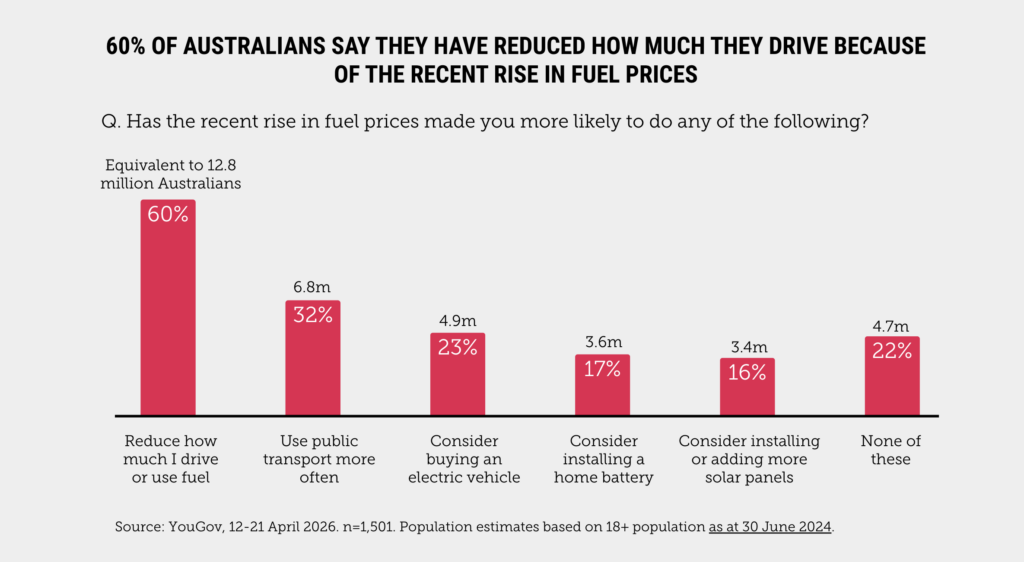
- An estimated 12.8 million Australians (60%) have reduced how much they drive or use fuel due to spiking costs.
- Almost two thirds of people (65%) want support to purchase an electric vehicle, with almost five million Australians now more likely to consider buying one.
- Australians want the Federal Budget to support them to have more control over their energy and bills, with 79% wanting help to buy more energy-efficient appliances and insulation, and 75% wanting support to purchase home batteries.
- About one third (32%) of people report using public transport more often.
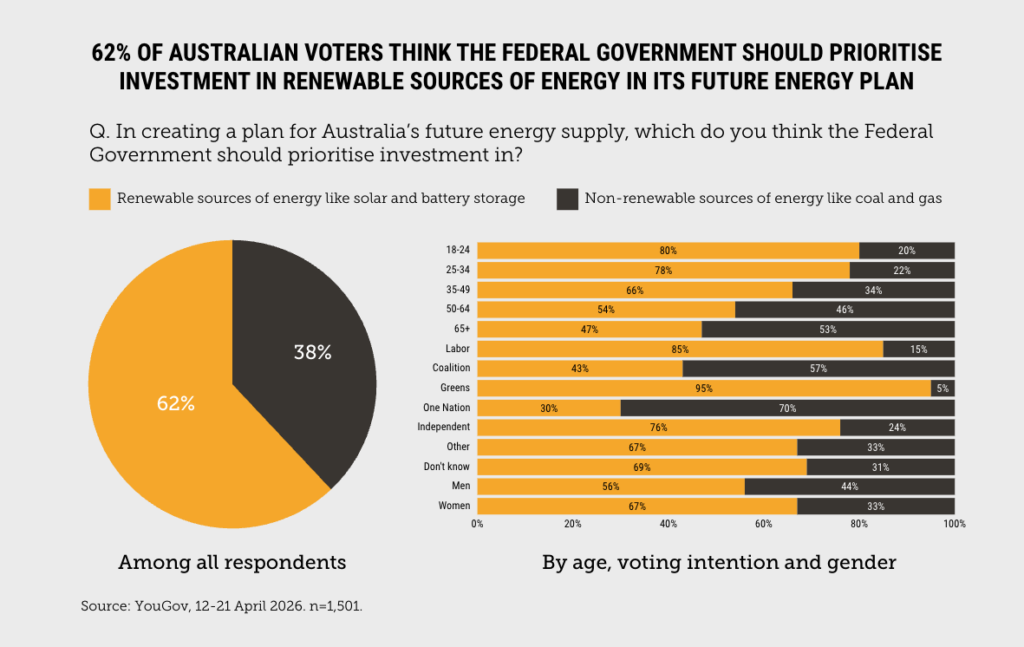
- To build our energy security, 62% of people want the government to prioritise investment in renewable energy, rather than coal and gas.
Now let’s delve a little deeper.
Practical budget measures Australians want to see
As people seek clean energy solutions to the fuel crisis, they are looking for budget measures to back their efforts.
- 79% support funding household energy-efficient appliances and insulation (only 7% opposed).
- 75% support funding making home batteries more affordable (only 7% opposed).
- 65% support funding making electric vehicles more affordable (only 13% opposed).
- 62% support funding expanding the number of electric vehicle charging stations (only 13% opposed).
- 58% support funding helping Australians access public and active transport (only 16% opposed).
To secure our energy future Australians want the government to prioritise renewables, not fossil fuels.
- 62% of people want the government to invest in renewable energy, rather than fossil fuel mining.
- 54% of people want the government to accelerate the shift to clean energy supply.
Australians have changed the way they do things to cope with the fuel crisis and are looking for clean energy solutions
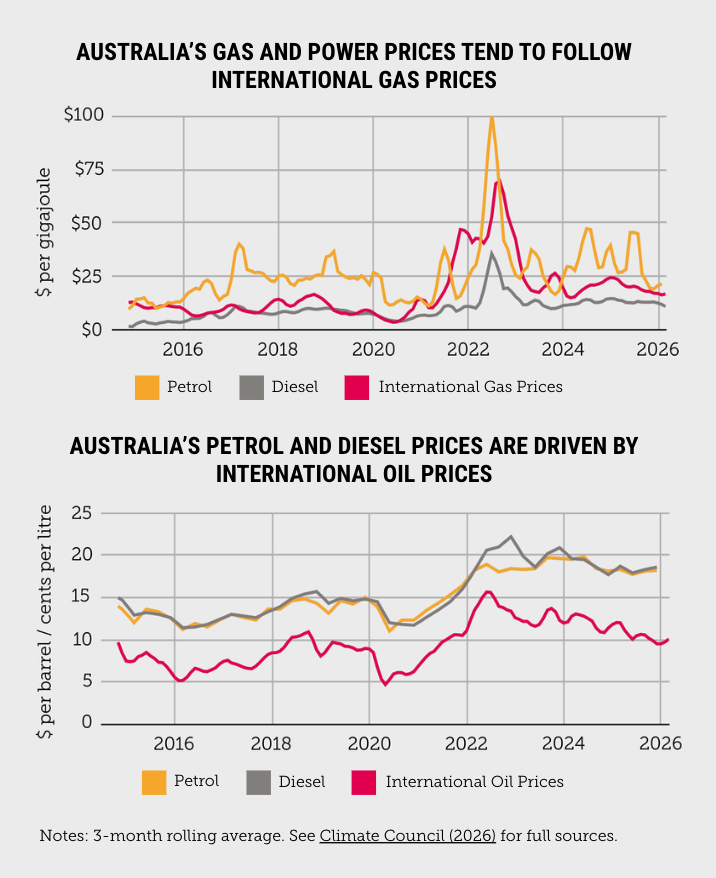
Australians are feeling the fossil fuel squeeze. During March, petrol prices surged by almost 50% and diesel by 70%, costing motorists more than $1 billion extra.
In response, Australians are adapting to avoid high costs:
- An estimated 12.8 million Australians (60%) have reduced how much they drive or use fuel.
- About one-third (32%) say they are using public transport more often.
- Almost 5 million Australians are now more likely to consider buying an electric vehicle, and 3.6 million are more likely to consider installing a home battery.
This desire to avoid sky-high fuel prices is already resulting in greater electric vehicle demand, with a record-high 15,680 electric vehicles sold in March – 80 percent more than were sold in March 2025.
Digging for more fossil fuels is slow, expensive and leaves Australians exposed
Extracting more fossil fuels is slow, expensive and will only leave Australia exposed to the next energy crisis.
- New gas and oil fields take about 10 years to go from discovery to production.
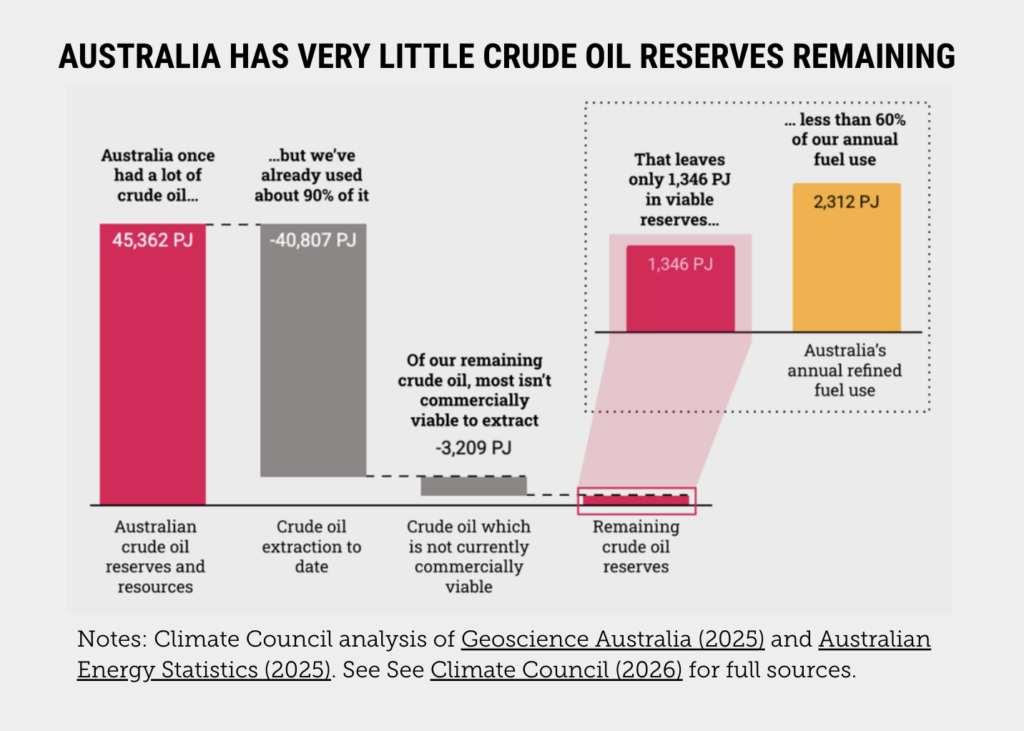
- Australia has already used 90% of its conventional crude oil reserves. Remaining reserves would only meet our fuel needs for seven months.
- Even if Australia could produce cheap oil, our fuel costs would still be driven by global oil prices.
- Australian refineries closed because they could not compete with more efficient Asian facilities up to 10 times larger. This is still the case.
The best solutions to the energy crisis are already helping to protect Australians
The best energy security solutions are already here, protecting Australians. We just need to expand them.
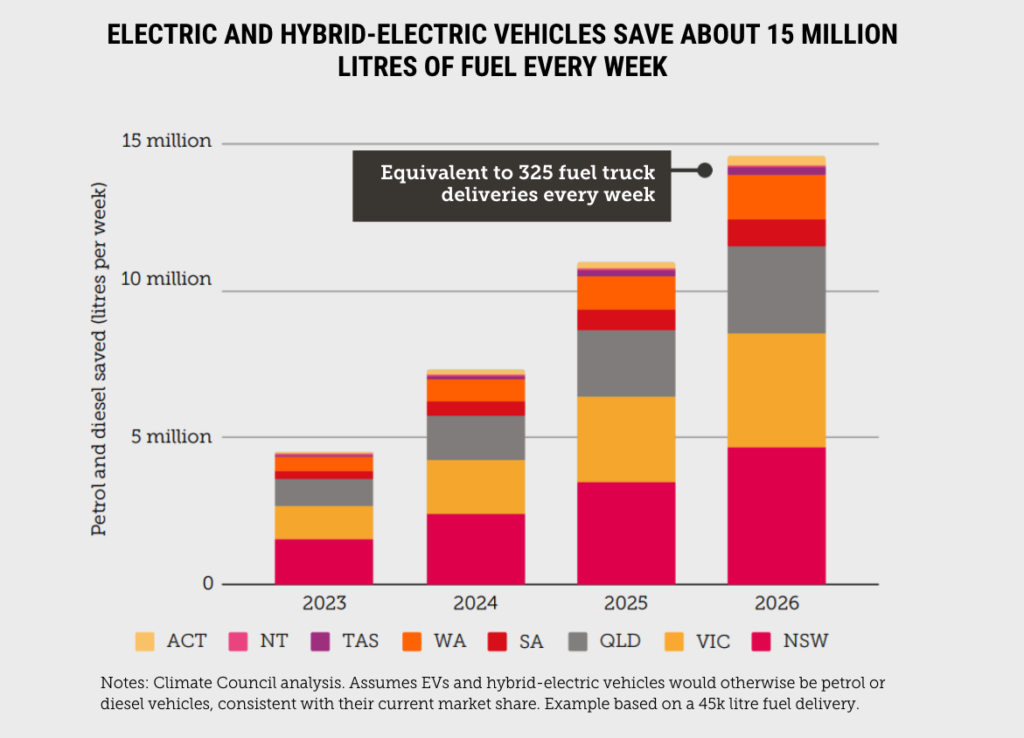
- Electric and hybrid vehicles are already saving almost 15 million litres of petrol and diesel every week – freeing up the equivalent of 325 fuel truck deliveries.
- Electric and hybrid vehicle owners saved about $50 million in fuel price spikes in March, and $62 million in April, with everyday Australians in the outer suburbs benefiting the most from government support to purchase EVs.
- From December to March, big batteries alone reduced gas use in our main grid by 8.1 petajoules, equivalent to the annual gas use of 163,000 Victorian homes.
Australians want the Budget to support clean energy
Australians are changing the way they do things to find solutions to the fuel crisis, electrifying their homes and transport. Now, they want the government to back their efforts in this year’s Federal Budget.
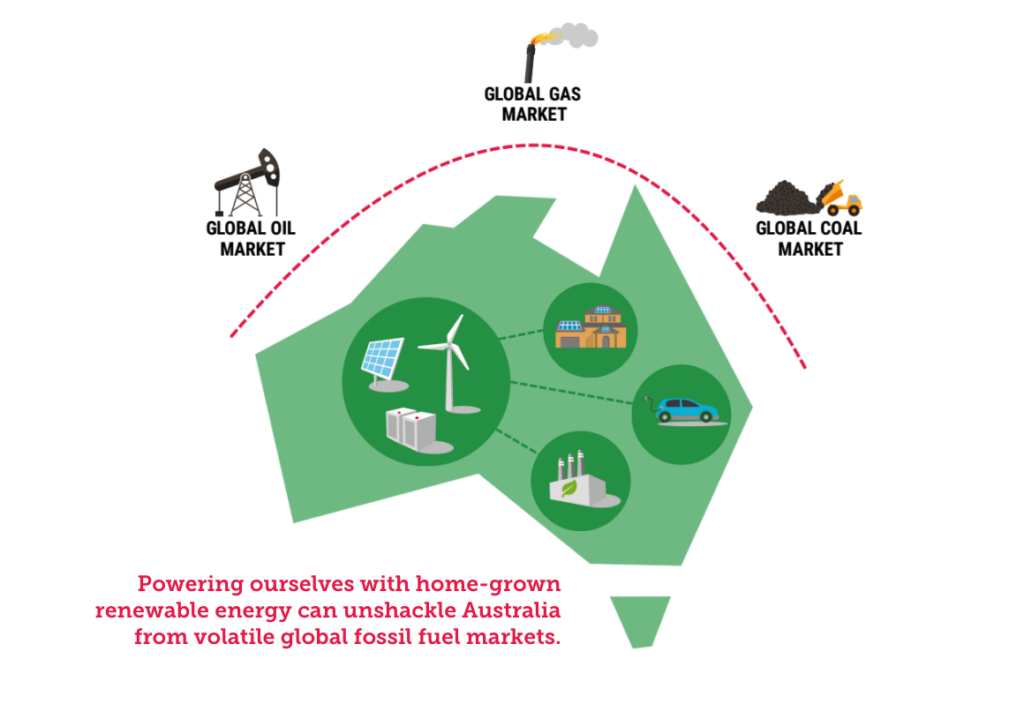
The switch to renewable power is our best chance to improve our energy security, shield households and businesses from volatile global fossil fuel markets, and cut climate pollution permanently.
This is not the first time global events have driven up energy costs, and it won’t be the last. The decisions made in the Federal Budget on May 12 will shape whether the hip pocket of Australians keeps getting hit, or whether we’re better protected next time.
To shield Australians from rising energy costs now and into the future, the Federal Budget should:
- Cut household bills with electrified homes, solar and batteries.
- Reduce fuel dependence with electric vehicles, shared and active transport.
- Power heavy industry with Australian renewables, not imported diesel.
- Make gas corporations pay their fair share of tax.
Read more: The Four Ways to Unlock Lasting Energy Security in this Year’s Federal Budget